If you’ve ever stared at the grey metal box bolted to the side of a building that feeds power to your apartment, your local coffee shop’s espresso machine, or the stoplight at the busy intersection, you’re looking at a distribution box. As a supplier who’s spent the last 12 years tweaking every part of these boxes to hold up to extreme weather, voltage spikes, and daily grime, I get asked all the time: “What even goes into one of these things?” It’s not just some random steel can—every material is chosen for a reason, and cutting just one corner can mean a whole lot of downtime or safety issues for whoever’s using it. Let’s break down the main parts, what they’re made of, and why I’d never swap in a cheaper version to save a buck. Distribution Box
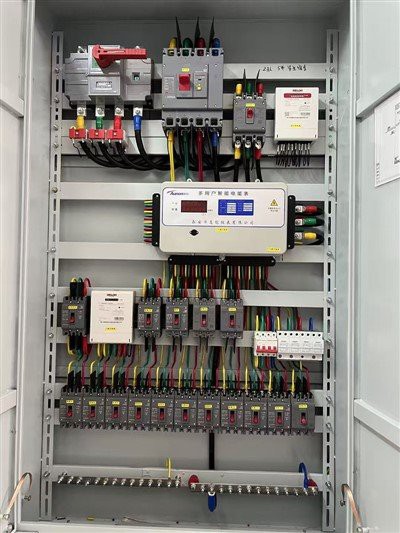
First, the big, obvious part that everyone sees: the enclosure. That’s the outer shell that keeps rain, snow, dust, and curious critters out while holding all the guts inside. If you’re buying these for areas with mild, dry climates, like parts of California or the Southwest US, you might get away with a box made of regular cold-rolled steel. It’s cheap, easy to bend into shape, and sturdy enough for places that don’t get hurricanes or salt air. But if you’re shipping these to Florida or the coast of Maine, salt air eats regular steel alive. It rusts through in 5 to 7 years, and suddenly you’ve got a box that lets water and corrosion in. That’s why for coastal or high-moisture zones, I use galvanized steel instead. Galvanized means the steel is dipped in a thin layer of zinc, which acts like a sacrificial shield—if a tiny scratch breaks through the zinc, the zinc rusts before the steel does. For extra harsh stuff, like locations with constant heavy rain or snow, we’ll go with stainless steel—usually 304 grade, which resists corrosion way better than galvanized. I recently had a customer in Alaska who had old galvanized boxes rusting out in 8 years, so we swapped them for 304 stainless, and they’re still going strong after 5 years with zero rust. There’s also a plastic option: polycarbonate or fiberglass reinforced plastic (FRP). A lot of people don’t know about these, but they’re a game-changer for places with extreme temperature swings or where weight matters—like utility boxes mounted on lightweight poles. FRP is non-conductive, too, so if someone accidentally touches the shell when the box is energized, it’s way less likely to give them a shock. I use FRP a lot for remote solar farms, where weight is a big deal and the panels don’t need a metal box to conduct anything.
Next up, the most critical part no one ever sees: the busbars and electrical conductors. These are the strips of copper or aluminum that carry power from the main line out to all the branch circuits. Copper has always been the go-to for most commercial and industrial distribution boxes because it’s a way better conductor than aluminum—less resistance means less heat buildup, which is a huge safety risk. Too much heat from bad conductors can melt insulation, cause fires, or trip breakers constantly. But aluminum is lighter and cheaper, so I’ll use it for some residential or small-scale commercial boxes where the power load is lower. The only catch with aluminum is it oxidizes when it’s exposed to air, so you have to coat it with a thin layer of tin or nickel to prevent that oxidation from ruining the connection. If you skip that step, the joint gets loose over time, creates more resistance, and starts overheating. I can’t tell you how many service calls I’ve handled where a cheap aluminum box without that coating was the root cause of a building’s power outages. The busbars themselves are usually cut to size, drilled for mounting holes, and either plated or treated to hold up to the elements and voltage.
Then there’s the insulation and mounting hardware inside. The parts that hold the busbars and breakers in place, make sure they don’t touch each other or the enclosure, and keep everything isolated. Most of this is made of thermoplastics or thermosetting polymers—stuff that doesn’t melt or break down when exposed to heat or electricity. The standard here is PVC (polyvinyl chloride) for cheaper boxes, but I prefer nylon or phenolic plastic for the interior parts. PVC can get brittle in cold weather, and if it’s exposed to UV light (if a box is mounted in direct sun), it breaks down and cracks after a few years. Nylon is way more durable, holds up to extreme temps, and resists UV way better. Phenolic is even sturdier—used for the heavier-duty parts like mounting brackets for high-amp breakers that carry 200 amps or more. I also use silicone rubber gaskets around the edges of the enclosure door. That gasket is what keeps water, dust, and bugs out—without it, even the best metal enclosure is useless. Cheaper suppliers will use thin, cheap rubber gaskets that crack after a year, but I use EPDM rubber, which is the same stuff used for car window seals and roof roofing. It holds up to heat, cold, and UV for 10+ years without drying out or cracking. I tested a few cheap gaskets once; after 2 years, they were hard as a rock, and water was seeping into a customer’s box in Arizona. Swapping in EPDM fixed that, and we haven’t had that issue since.
Breakers and switching devices are another big component, and their materials matter a lot too. The internal parts of a circuit breaker—like the contacts, the tripping mechanisms, and the arc chutes—aren’t random. The contacts have to be a metal that can handle repeated on/off switching without arcing or burning out. Most modern breakers use silver-tungsten alloy for contacts; silver is a great conductor, and tungsten is super tough, so the contacts don’t wear down after thousands of uses. Older breakers used solid copper contacts, but they burn out way faster with frequent switching. The arc chutes—those little compartments inside the breaker that snuff out the spark when a breaker trips—are usually made of fiberglass or ceramic. When a breaker trips, there’s a big spark of electricity, and if that spark doesn’t get extinguished fast, it can cause a fire or short the whole system. Ceramic is the best here because it can handle the extreme heat of that spark without melting, but it’s also more expensive than fiberglass for lower-amperage breakers. I’ll use ceramic for breakers over 100 amps, and fiberglass for smaller residential ones, since they don’t get as hot when tripped.
Wait, let’s not forget about the finish on metal enclosures. Even galvanized and stainless steel need a good paint or powder coat to hold up to UV light and chemicals. I use a high-gloss powder coat, usually in the standard grey that most utility companies like, but we can do custom colors too if a customer needs it. Powder coat is way better than wet paint because it’s thicker, doesn’t chip as easy, and doesn’t fade in the sun for decades. I tested wet paint once for a project in Texas—after 3 years, it was peeling and faded so bad the boxes looked old. Powder coat? Still looks good after 8 years, no issues. For boxes that are going to be exposed to chemicals, like near a chemical plant or a wastewater treatment facility, we’ll add an extra layer of protective coating, like polyester-based powder coat, which resists chemical corrosion way better than standard epoxy.
I get it, everyone’s looking to save a little money these days. When a customer calls and says “your box is $50 more than Supplier X,” I don’t jump to match the price. I tell them why: Supplier X is using regular cold-rolled steel for a coastal area, no zinc coating, cheap rubber gaskets, and solid copper instead of silver-tungsten contacts. That $50 savings will cost them $2,000 in repairs 5 years down the line when the box rusts out or a breaker burns up. I’ve seen it too many times. A restaurant in Miami bought cheap boxes for their new location, and after 4 years, two of the boxes rusted so bad power was cutting out to their kitchen. They had to shut down for a day to replace them, and lost way more in revenue than they saved upfront. That’s why every material we pick is vetted for the specific environment the box will be in—no one-size-fits-all, no cutting corners.
If you’re shopping for distribution boxes, don’t just look at the price tag. Ask what the enclosure is made of, what kind of gaskets they use, what the busbars are coated with, and what the breaker contacts are made of. It might seem like small details, but they make all the difference between a box that lasts 10+ years and one that needs replacing before you even finish paying for it. I’ve been in this game long enough to know that a good distribution box is more than just a container—it’s the backbone of a safe, reliable power supply for homes, businesses, and whole communities.
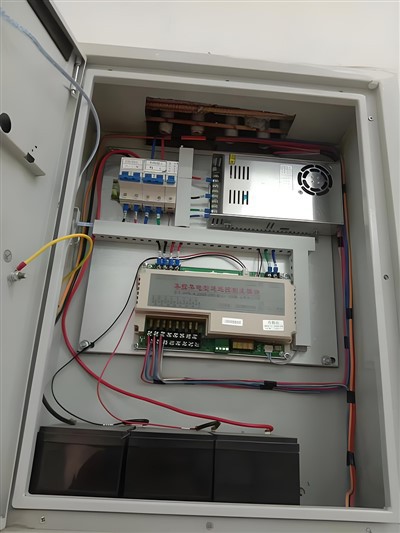
If you’re in the market for custom or standard distribution boxes, or you need help picking the right materials for your specific project, feel free to reach out. We work with everyone from small residential electricians to large utility companies, and we’ll make sure you get a box that’s built to last, no cutting corners.
Distribution Chamber References: 1. Electrical Construction & Maintenance. “Understanding Distribution Enclosure Materials for Harsh Environments.” 2. National Electrical Manufacturers Association (NEMA). “NEMA Standards for Distribution Box Enclosures.” 3. Copper Development Association. “Conductor Materials: Copper vs. Aluminum for Power Distribution.”
Anhui Nanxian Electric Co., Ltd.
With abundant experience, we are one of the most professional distribution box manufacturers and suppliers in China. We warmly welcome you to buy advanced distribution box for sale here and get quotation from our factory. All customized products are with high quality and low price.
Address: Factory Unit 03-2, Building 21, Feidong Yinfeng Industrial Park Co., Ltd., Northeast Corner of Manquan Road and Changle Road, Hefei Circular Economy Demonstration Park, Feidong County, Hefei City, Anhui Province.
E-mail: 541580567@qq.com
WebSite: https://www.nxelepower.com/
