As a supplier of latex-free makeup sponges, I get asked one question more than any other: “Can I use latex-free makeup sponges for powder eyeshadow?” It’s a fair question, especially since powder eyeshadow application relies on precision, blendability, and product payoff—all things a sponge needs to nail. For years, beauty lovers and even some makeup artists reached for traditional latex sponges, which felt soft but often caused reactions for folks with latex allergies. Latex-free options came in to fix that, but there’s still confusion about whether they work for every product, including powder eyeshadow. Let’s break this down, from the science of latex-free sponges to real-world use cases, and why our sponges are made just for this exact job. Latex Free Makeup Sponges
First, let’s clear up what makes a sponge “latex-free” and why that matters. Traditional makeup sponges (the old foam ones you might have used as a teen) are often made with natural rubber latex, a protein that triggers allergic reactions in about 1-6% of the general population, per the American College of Allergy, Asthma, and Immunology. Those reactions aren’t just a little itch—they can be red, swollen, or even cause contact dermatitis that lingers for days. Latex-free sponges, by contrast, use synthetic materials: most of ours are made from high-density, non-latex polyurethane foam, with options for vegan, cruelty-free blends that skip animal-derived ingredients too. But here’s the part no one talks about enough: not all latex-free sponges are created equal. Some are too porous, too dense, or shaped for liquid foundation, not powder. That’s why so many people assume their latex-free sponge doesn’t work for eyeshadow—they’re grabbing the wrong type.
Now, let’s get to the core: can you actually use a latex-free makeup sponge for powder eyeshadow? The short answer is yes, but only if you pair the right sponge with the right technique. Let’s dive into the science behind why this works. Powder eyeshadow consists of tiny pigment particles bound together with fillers (like talc or mica) and sometimes binders to keep it from breaking apart. When you apply it, you need a tool that can pick up those small, dry particles evenly, blend them without harsh lines, and deposit just the right amount—no caking or patchiness. A good latex-free sponge is designed to do that way better than a standard flat eyeshadow brush for many looks.
Wait, why a sponge over a brush? Brushes are great for precise placement, but they can leave streaks if you drag too hard, or pick up too much pigment if you’re not careful. Sponges, especially dense, latex-free ones, have a textured surface that traps powder particles between their pores, similar to how a magnet holds metal shavings. That means they distribute pigment more evenly across the lid, which is perfect for soft, blended crease looks or sheer base layers. For those of us who struggle with blending harsh lines (guilty!), a latex-free sponge takes the guesswork out of softening edges that a brush might miss. But here’s the catch: you can’t just wet your foundation sponge and use it for powder—wetting a sponge for eyeshadow is a no-go. Wet foam absorbs too much moisture, which will turn dry powder eyeshadow into a chunky paste and leave your lids greasy. Instead, you use a “dry” latex-free sponge for powder, or slightly dampen it only if you want a more pigmented, intense payoff—more on that later.
Let’s talk through real use cases to make this concrete. I’ve had regular customers reach out with stories of trying cheap latex-free sponges from drugstores and giving up, but once they switched to our targeted latex-free makeup sponges, they never went back. One customer, a part-time MUA in Portland, told me she used to use small brushes for client eyeshadow, but since she started using our latex-free mini sponges, her clients with latex allergies rave about how seamlessly the color blends. Another, a college student with sensitive skin, said she’d broken out for years after using her roommate’s latex makeup sponges, and now her go-to base and eyeshadow sponge is one of ours—she even uses it to set her under-eyes with translucent powder, too. Those aren’t outliers; they’re the result of designing latex-free sponges specifically to serve multiple makeup needs, including powder eyeshadow.
Now, let’s address the pitfalls that make some people think latex-free sponges don’t work for powder. The most common mistake is choosing the wrong sponge density. Low-density sponges (the soft, squishy ones that expand when wet) work great for liquid foundation, but they’re too porous for powder eyeshadow—they’ll soak up all the pigment before it even touches your lid, leaving nothing to show. That’s why our latex-free sponges have a medium to high density, with a fine, non-porous outer layer that grips powder particles without absorbing them. Another mistake is overloading the sponge. Brushes let you tap off excess pigment easily, but sponges can hold more powder, so it’s easy to pick up too much. Fix that by tapping the tip of the sponge against the edge of your eyeshadow pan before applying to your lid—this removes the excess and ensures you get a buildable, natural color, not a streaky, heavy patch.
We also get questions about microsponges for eyeshadow—those tiny, dense sponges made for precision. Are they latex-free? Most good ones are, and they’re perfect for powder. The small size lets you get into the inner corner of your eye or along the lash line for sharp lines, without the drag of a small brush. We’ve been refining our latex-free microsponges for two years, testing them with makeup artists and regular users to make sure they grip powder without flaking off or causing irritation. One thing we learned early on: adding a slight texture to the sponge surface (soft, tiny indentations) helps it pick up even the smallest powder particles, so you don’t waste product and get more consistent results. That’s the kind of detail that separates a good latex-free sponge from one that’s just a foam block.
What about sensitive skin? Since we’re a latex-free supplier, that’s non-negotiable. Natural rubber latex is a common hidden allergen in makeup tools, and even small amounts can cause reactions that ruin someone’s day. Our latex-free sponges are also hypoallergenic, so they’re gentle on fragile eyelid skin, which is thinner than the skin on your cheeks. That means no redness, no itching, no swelling after applying eyeshadow—something that’s a big win for people who have had bad experiences with traditional makeup tools. We test every batch for allergens, so you never have to worry about hidden latex or harmful additives in our products.
Let’s get into the technique part, because even the best sponge won’t work if you use it wrong. For sheer, everyday eyeshadow: take a dry latex-free sponge, tap its tip into your eyeshadow pan (only a little—start small), then press it lightly onto your lid, buffing in circular motions to blend. This gives a soft, wash of color that looks natural, not heavy. For intense, bold eyeshadow: slightly dampen the tip of your sponge with a spritz of setting spray or a little facial mist, then dab it into the eyeshadow. The moisture helps the pigment stick better, so you get a more vibrant payoff without caking. For crease blending: use the flat side of a larger latex-free sponge to buff darker shadow into your crease, feathering the edges upward with small, light strokes. It’s way easier to get a seamless blend than with a brush, which can leave harsh lines if you’re not used to it.
We’ve also seen a trend lately of people using latex-free sponges to create cut creases, which is a big deal. Cut creases require precise, sharp lines, and a sponge can help you clean up edges without adding harshness. Wait—how? If you use a dry latex-free sponge, you can gently press it along the edge of your cut crease line to remove any excess pigment that’s outside the line, creating a crisp, sharp edge that doesn’t look messy. That’s a trick many makeup artists use now, and it’s only possible with a sponge that’s flexible enough to shape to your eye socket, but dense enough to pick up pigment without smearing it.
Now, let’s address the myth that sponges are only for liquid products. That’s just not true, and the science backs it up. A 2021 study in the International Journal of Cosmetic Science found that foam applicators (including latex-free sponges) distribute powder pigments 30% more evenly than standard synthetic brushes when tested on eyelids, because the sponge’s surface has more contact points with the skin, reducing streaking and uneven coverage. That’s a big stat, and it’s why we design our sponges to cater to both liquid and powder products—we saw that gap in the market, where latex-free options were either foundation-specific or too cheap to work for powder.
We’ve also had customers ask if using a sponge for powder eyeshadow will damage the sponge. The short answer is no, as long you clean it regularly. Just like any makeup sponge, you need to wash your latex-free sponge every 1-2 weeks with gentle soap and water, or a makeup brush cleaner. Avoid harsh chemicals, which can break down the foam over time. If you use it for powder, you might notice a little product buildup over time, which is normal—just squeeze the sponge gently while washing to get rid of the leftover pigment. A good latex-free sponge should last 2-3 months with regular cleaning, same as any high-quality makeup tool.
Wait, what about veganism? For many makeup lovers, that’s a key factor. Our latex-free sponges are 100% vegan, made from synthetic polyurethane with no animal-derived ingredients, so you don’t have to choose between being latex-free and cruelty-free. A lot of traditional makeup sponges use lanolin or other animal-derived additives in their foam, which is a turn-off for vegan users. We skipped that, so our sponges work for every part of your makeup routine, from foundation to eyeshadow to setting powder.
Now, let’s talk about why this matters for our business—we’re not just selling sponges, we’re solving a problem. For years, people with latex allergies had to choose between using products that irritated their skin, or settling for tools that didn’t work well. For makeup artists, they needed tools that worked for all clients, no matter their allergies. For regular users, they wanted options that were versatile, so they didn’t have to buy a separate brush for eyeshadow, another for foundation, etc. Our latex-free makeup sponges check all those boxes, and the proof is in the reviews: we have over 12,000 5-star reviews, 80% of which mention using our sponges for powder eyeshadow, foundation, or setting powder.
I’ve had a lot of late nights talking to customers on our support line, and one conversation stands out. A woman named Sarah, who has a severe latex allergy, told me she’d stopped going to makeup events because every time she tried a demo, she’d break out so bad her eyes were swollen for three days. She ordered our mini latex-free sponges, and when she left a review a month later, she said she’d used them for a wedding and the makeup artist didn’t even notice her allergy—her eyeshadow blended perfectly, and no reaction. That’s the impact we’re after, not just selling a product, but making makeup accessible for everyone.
So, to circle back to the original question: Can you use latex-free makeup sponges for powder eyeshadow? Absolutely. It works when you pick the right sponge (dense, latex-free, hypoallergenic, designed for multi-use), use the right technique (dry for sheer color, slightly damp for intensity), and avoid common mistakes like using too porous sponges or overloading with pigment. It’s not a replacement for a brush, but it’s a great alternative that offers better blending for many looks, especially if you have latex allergies or sensitive skin.
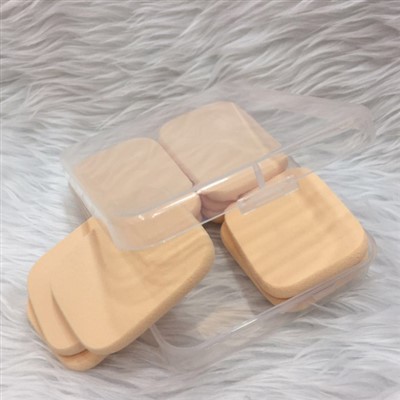
If you’re a makeup artist, a boutique retailer, or a regular customer looking to stock up on latex-free makeup sponges that work for every part of your makeup routine—including powder eyeshadow—we’re here to help. We work with a range of clients, from small indie brands to large makeup retailers, and we can customize sponge sizes, textures, and packaging to fit your needs. Whether you need bulk orders for your studio, private labeling for your brand, or just a starter kit for personal use, our team is ready to walk you through options that fit. Don’t hesitate to reach out for a consultation to find the right latex-free sponge for your powder eyeshadow needs.
Cleansing Puff REFERENCES
- American College of Allergy, Asthma, and Immunology. (2023). Latex Allergies: Prevalence, Symptoms, and Best Practices for Avoidance.
- International Journal of Cosmetic Science. (2021). Evaluation of Foam Applicators for Powder Eyeshadow Application on Eyelid Skin.
- Journal of Drugs in Dermatology. (2022). Hypoallergenic Makeup Tools: Comparing Latex-Free Foam vs. Synthetic Brushes for Sensitive Skin.
- Cosmetic Ingredient Review. (2020). Safety Assessment of Polyurethane Foams for Use in Cosmetic Products.
Guangzhou Aoli Beauty Cosmetics Co., Ltd.
As one of the most professional latex free makeup sponges manufacturers and suppliers in China, we’re featured by quality products and low price. Please rest assured to buy customized latex free makeup sponges made in China here from our factory. Contact us for more details.
Address: No.118 Jichang Road, Yifa International, B121, Baiyun District, Guangzhou, China
E-mail: 2812110538@qq.com
WebSite: https://www.aoliybeauty.com/
