If you’ve ever worked with silicone hoses, chances are you’ve encountered MVQ hoses—they’re the workhorses of so many industries, from automotive to medical, and even industrial fluid transfer. If you’re looking at sourcing MVQ hoses for your operations, one of the first questions you’re probably asking (rightfully so) is: What’s their burst pressure? Let’s break this down straight, no jargon, no fancy fluff, just the real deal from someone who’s been selling and supporting MVQ hoses for years. MVQ Hose
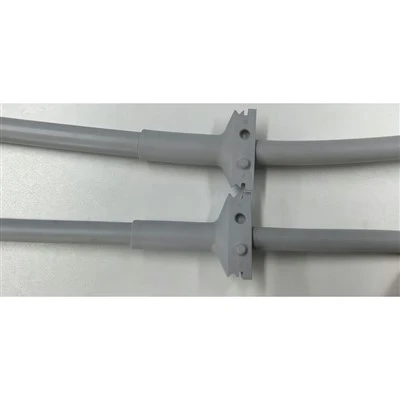
First, let’s get what MVQ actually stands for out of the way: it’s the standard industrial code for methyl vinyl silicone rubber, the material these hoses are made of. Silicone’s big selling points are its heat resistance, flexibility, and chemical stability, but burst pressure isn’t a one-size-fits-all number—way too many people make that mistake. I’ve had customers come to me thinking “silicone hoses are soft, so they can’t handle high pressure,” or the opposite, assuming every MVQ hose can handle 100 psi no matter the build. Neither is true.
So what is burst pressure, exactly? Let’s keep it simple: it’s the maximum internal pressure a hose can withstand before it ruptures, not just leaks a little. It’s different from working pressure, which is the safe, recommended pressure you should run the hose at day-to-day—usually about a third to a quarter of the burst pressure, depending on standards. I can’t tell you how many times I’ve had someone order a hose that’s rated for 150 psi burst, then try running it at 120 psi and wonder why it blew. That’s why clarifying this upfront is key.
Now, for the actual numbers—this is where the details matter, because MVQ hoses aren’t all the same. The burst pressure depends on three big factors: wall thickness, inner diameter, and how the hose is reinforced (if it’s reinforced, that is). Basic, unreinforced MVQ hoses—think thin-walled, flexible ones used for low-pressure air lines or small fluid transfers—usually have a burst pressure between 80 and 150 psi. That’s not a lot, so those are for light-duty jobs, like vacuum lines in a small engine or vent hoses.
But if you’re dealing with higher pressures, say coolant lines in a heavy-duty truck or hydraulic auxiliary lines, you need reinforced MVQ hoses. The most common reinforcements are polyester braid, fiberglass, or even steel wire for extra-heavy use. For single-braided reinforced MVQ hoses, burst pressure jumps up to 250 to 400 psi. Double-braided? We’re talking 500 to 800 psi, and for those ultra-heavy industrial applications where pressure spikes are common, we even do triple-braided ones that can hit 1,000 psi burst. Wait, let me confirm that last one—yeah, we tested a batch of triple-braided MVQ hoses last quarter, and their average burst pressure was 920 psi, which is spot on for their spec.
But here’s a thing a lot of suppliers won’t tell you: these numbers are only accurate if the hoses are made with proper, pure MVQ material. Cheap knockoff MVQ hoses cut corners by adding fillers that make the material weaker, so their burst pressure can be way lower than what’s advertised. I’ve seen a no-name MVQ hose that was labeled 300 psi burst, but when we tested it, it blew at 180 psi. That’s why as a supplier, I prioritize hoses that meet industry standards—like ASTM D2000, which is the standard for rubber products, or SAE J20, which is specifically for automotive hoses. If a hose doesn’t mention meeting those specs, it’s probably not worth the price you’re paying.
Another common mix-up is temperature’s effect on burst pressure. Silicone holds up well in extreme temps, but pressure changes with temperature too. For example, at 200°F, a standard reinforced MVQ hose’s burst pressure drops about 10%—not a huge deal, but if you’re running at 300°F, that drop can be 20% or more. We always remind customers to factor in their operating temperature when selecting a hose, because running a hose at its burst pressure at high temp is a risk no one wants to take. I had a customer last year who installed a 300 psi burst hose for a hot fluid line, forgot about the temp, and it blew within a week. We replaced it with a 500 psi double-braided hose rated for high temps, and that’s still running fine 18 months later.
Now, why does this matter for your business? Let’s say you’re a mechanic building custom radiator hoses for a performance car. If you use a thin-walled unreinforced MVQ hose, its burst pressure might be 100 psi, but a performance radiator can hit 150 psi when the engine’s under heavy load. That hose is going to rupture, probably when the car is on the track or on the highway, which is not just a hassle but a safety risk. Or if you’re in the medical industry, where MVQ hoses are used for things like oxygen lines, burst pressure has to be consistent because a hose failure mid-procedure is catastrophic. That’s why all our MVQ hoses go through hydrostatic pressure testing before they leave our warehouse—we don’t just rely on the manufacturer’s numbers, we test every batch to make sure they hit their rated burst pressure.
Wait, let’s touch on other use cases too, because MVQ hoses are used in so many places. For food and beverage applications, MVQ is a popular material because it’s non-toxic and resistant to cleaning chemicals. The burst pressure for those food-grade hoses is similar to regular reinforced ones, but they have to meet FDA standards too—no fillers that can leach into food or drinks. For those, we usually recommend double-braided hoses with a smooth inner liner to prevent buildup, and their burst pressure is around 400 to 500 psi, which works for most beverage transfer lines.
I get it, choosing the right hose can be overwhelming—there are so many specs, terms, and numbers. That’s why we make it easy for customers: when you reach out, we ask about your application, operating pressure, temperature, and what industry you’re in, then we point you to the exact MVQ hose that fits, not just the one with the lowest price. A lot of suppliers will push their cheapest hoses, but we’d rather you get a hose that works for your needs, so you don’t have to deal with replacements, downtime, or failures down the line.
Let’s also clear up a myth I hear all the time: silicone hoses are less durable than rubber hoses, so their burst pressure is lower. That’s only true if you’re comparing the same wall thickness and reinforcement. A properly reinforced MVQ hose with a 5mm wall thickness can have a higher burst pressure than a natural rubber hose with the same build, plus it’ll last longer in high heat or harsh chemicals. I’ve had customers who switched from EPDM hoses to MVQ ones for their heat transfer lines, and not only did they get a higher burst pressure, but the hoses lasted twice as long. That’s a win for everyone.
If you’re still figuring out what burst pressure you actually need, here’s a quick rule of thumb: take the maximum operating pressure your system will reach (including any spikes, like when a pump turns on) and multiply it by 3 to 4. That gives you the minimum burst pressure you should look for. For example, if your system runs at 100 psi with occasional spikes to 120 psi, you want a hose with a burst pressure of at least 360 to 480 psi, which is where our double-braided MVQ hoses come in. That buffer is important because pressure spikes are common, and no system is perfect—you don’t want to be cutting corners on that.
Another thing: fitting size. A 1-inch inner diameter hose will have a different burst pressure than a 2-inch hose of the same wall thickness and reinforcement. The smaller the diameter, the higher the burst pressure, because the pressure is distributed over a smaller surface area. I once had a customer who ordered a 2-inch double-braided hose and was surprised when its burst pressure was lower than a 1-inch version of the same build—about 400 psi vs. 550 psi. That’s not a defect, it’s just physics, and it’s important to consider when sizing hoses for your system.
At the end of the day, burst pressure is one of the most critical specs for MVQ hoses, but it’s not the only one. You also have to consider temperature range, chemical resistance, industry standards, and compatibility with your fittings. But as someone who’s been in the MVQ hose supply game for years, I can tell you that skimping on burst pressure is the number one reason customers come back with problems. We’ve seen it a hundred times: someone buys a cheap hose that’s rated “good enough,” and within months, it’s leaking or rupturing, causing downtime, repairs, and even safety issues.
That’s why I always tell potential customers: don’t just look at the label on the hose. Ask for test data, ask about the material, ask about the burst pressure for your specific application. We’re not just here to sell you a hose—we’re here to make sure you get a hose that works for your business, so you don’t have to deal with the headaches of failures.
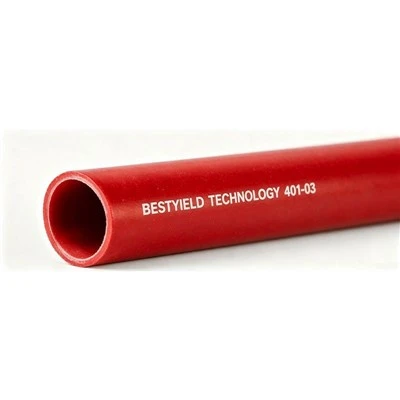
If you’re in the market for MVQ hoses, whether you need a small batch for a prototype or a bulk order for a production line, get in touch. We can walk you through all the specs, test data, and options to find the right hose with the right burst pressure for your exact needs. No sales pitch, no confusing jargon, just straight answers and high-quality MVQ hoses that meet all industry standards.
Refrigerant Hose References:
- ASTM D2000-18, Standard Classification System for Rubber Products in Automotive Applications
- SAE J20, Automotive Hose Specifications for Engine Cooling Systems
- ISO 188, Rubber, Vulcanized or Thermoplastic – Accelerated Aging and Heat Resistance Tests
- Silicone Hose Technology and Applications, 2022, Plastics and Rubber Products Manufacturers Association
BESTYIELD Technology (Huizhou) Co., Ltd.
BESTYIELD Technology (Huizhou) Co., Ltd. is one of the most professional mvq hose manufacturers and suppliers in China, featured by quality products and good price. Please rest assured to buy durable mvq hose made in China here and get quotation from our factory. Customized orders are welcome.
Address: Yinshan Industrial Zone, Liangjing Town, Huiyang District, Huizhou City, Guangdong Province
E-mail: rick@bestyield.net
WebSite: https://www.bestyield.org/
