If you’ve ever opened a car door, hooked up a backup camera, or adjusted your infotainment screen mid-drive, you’ve interacted with a flat cable—though you probably never noticed it. For 12 years, I’ve supplied flat cables to automotive OEMs and tier-one parts suppliers, and one question I get at every industry trade show, every client call, and even over casual coffee with a mechanic is: “What exactly makes an automotive flat cable different from the random ones I can buy online for my home theater?” It’s a fair question. The automotive space isn’t just about conductivity or flexibility; it’s about surviving extreme conditions, adhering to strict regulatory standards, and fitting into spaces that no other cable type can. Today, I’m breaking down the key specifications that define automotive flat cables, straight from a supplier who’s spent a decade troubleshooting these exact requirements for vehicles rolling off assembly lines worldwide. Flat Cables
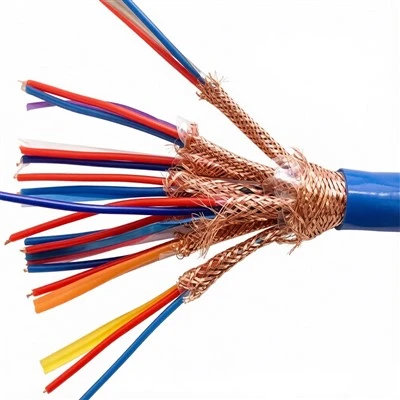
First, let’s start with the core structure: automotive flat cables aren’t just a bunch of copper strands pressed between two plastic layers. The base material for the cable’s insulation and substrate is non-negotiable. We don’t use cheap PVC for anything intended for a car—PVC breaks down in the temperature swings under the hood, and it leaches chemicals that can corrode copper over time. Instead, the standard here is cross-linked polyethylene (XLPE), but not just any XLPE. We specify a grade formulated for automotive use, with a minimum thickness of 0.2mm. Why? Under the hood, temperatures can hit 125°C on a hot day, and plummet to -40°C in northern winters. A thinner substrate won’t withstand repeated thermal expansion and contraction—within two years, it would crack, exposing the copper and causing a short. For interior applications, like connections to dashboard controls, we use a slightly different formulation: thermoplastic polyurethane (TPU) with a 0.18mm thickness, because it needs to flex thousands of times without tearing when you slide the infotainment screen or adjust the steering wheel.
Next, conductor material and gauge. Most people assume all copper is the same, but for automotive flat cables, we use high-purity oxygen-free copper (OFC) with a 99.99% minimum purity rating. Why not standard copper? Standard copper has trace impurities that oxidize faster, especially in the humid, vibration-heavy environment of a car. Oxidation creates high resistance, which leads to voltage drop—something you can’t afford when powering a safety-critical component like an anti-lock braking system (ABS) sensor. Gauge is equally important, and it’s not just about carrying current: we size conductors based on two factors: maximum current load and the space the cable has to fit. For low-voltage interior components, like a backup camera (which draws less than 0.5A), we use 30AWG conductors. For high-current applications, like powering a heated seat (which draws up to 5A), we drop to 24AWG. A common mistake new clients make is ordering a larger gauge “just to be safe” — that adds thickness, which means the cable can’t fit into the tight spaces between a car’s door panel and frame, or behind the dashboard. We always run a voltage drop calculation for each design, too: automotive standards require a maximum 2% voltage drop across the entire cable length, so we never stray from that to save on material.
Flexibility and bending life are two more non-negotiable specifications, and these are where automotive flat cables really shine (or fail, if you cut corners). Automotive flat cables are often routed in moving parts: door hinges, steering columns, sunroofs, and sliding console compartments. These parts bend the cable anywhere from 10,000 to 1,000,000 times over the vehicle’s lifespan. The test here is a bending cycle test, per SAE J1128, the standard for automotive electrical cables. For a door-mounted cable, which bends roughly 15,000 times a year (door opens and closes once per trip), we specify a minimum of 200,000 bending cycles with a 90-degree bend radius. Wait, bend radius—another key spec. The bend radius is the smallest curve a cable can be bent without damaging the conductors or insulation. For interior static cables, a 5mm bend radius is standard, but for moving door cables, we require a 10mm minimum. Bend radii smaller than that can cause conductor fatigue: the copper strands will break over time, even if the insulation looks fine. We once had a client test a competitor’s flat cable in a door application; it only lasted 12,000 bending cycles before failing, because their bend radius was 6mm instead of 10mm. That’s the kind of mistake that leads to recalls, which is why clients come to us for these exact, detail-oriented specs.
Environmental resistance is where automotive flat cables differ most from consumer flat cables. Your home theater flat cable might get dusty and occasionally spilled on, but an automotive flat cable has to survive oil, gasoline, road salt, UV radiation, and extreme temperature swings. We test our cables for chemical resistance per ISO 6722, the global standard for automotive electrical systems. Our exterior-grade cables (for under-hood or door exterior applications) have to withstand 24 hours of exposure to gasoline, motor oil, and road salt solutions without any swelling, cracking, or discoloration. Interior-grade cables have to resist automotive cleaning chemicals, like the ones used to wipe down dashboards, and UV radiation for at least 1,000 hours without fading or brittle insulation. We also add a flame-retardant additive to all our automotive flat cables, per FMVSS 302, the U.S. Federal Motor Vehicle Safety Standard for flammability. If a short occurs, the cable has to stop burning within 60 seconds, no dripping molten plastic that could spread fire. That’s a huge safety spec that doesn’t show up in consumer cables, but it’s non-negotiable for every vehicle on the road.
Electrical performance specs matter too, beyond just voltage drop. Automotive flat cables have to handle EMI (electromagnetic interference) and ESD (electrostatic discharge), both of which can cause sensor glitches or even safety system failures. For EMI, we offer two shielding options: aluminum foil shielding for low-interference applications, like interior lighting, and braided copper shielding for high-interference applications, like infotainment and ADAS (advanced driver-assistance systems) sensors. The shielding has to cover 100% of the cable’s conductor area, per IPC-HF3, the standard for flexible flat cables. For ESD, we ensure that the insulation has a surface resistivity between 10^9 and 10^12 ohms per square. That’s the sweet spot: high enough to prevent static buildup that can damage electronics, but low enough to not block signal flow. We tested a non-shielded cable for an ADAS client a few years back; it was picking up interference from the engine control unit (ECU), which caused the lane-keep assist system to flicker randomly. Adding the braided shielding fixed the issue, and that’s the kind of detail we build into every cable we supply.
Size and dimensional tolerance are also critical, especially in modern cars where space is at a premium. Automotive manufacturers are shrinking dashboards, door panels, and center consoles to make vehicles more aerodynamic and fuel-efficient. That means flat cables have to fit into gaps that are often less than 2mm thick. We specify a dimensional tolerance of ±0.05mm for the cable’s total thickness. A competitor might supply a cable that’s 0.07mm over the specified thickness, and that’s just enough to not fit behind the dashboard, leading to assembly line delays. We also cut cables to exact length within ±1mm tolerance—no extra length, no too-short cables that require splicing, which adds weight and failure points. That level of precision isn’t cheap, but it’s essential for automotive assembly lines, where every second of delay costs thousands of dollars.
Now, let’s talk about testing and certification, because specs mean nothing if a cable can’t prove it meets them. Every batch of our automotive flat cables goes through three levels of testing: in-house lab testing, third-party certification, and on-vehicle validation. In-house, we test every batch for bending cycles, temperature resistance, and voltage drop. Third-party labs verify compliance with SAE J1128, ISO 6722, FMVSS 302, and IPC-HF3—no exceptions. We also work with our clients to run on-vehicle tests: we install our cables in prototype vehicles and drive them through extreme conditions: desert heat tests in Arizona, cold weather tests in Minnesota, salt spray tests in Michigan. We once had a client bring us a prototype electric van that was failing door cable tests in cold weather; our standard cable was cracking at -35°C. We reformulated the TPU substrate to add a low-temperature plasticizer, and now that same cable withstands -40°C without cracking. That’s the kind of collaborative problem-solving that comes from being a supplier who’s rooted in automotive, not just selling off-the-shelf cables.
I get asked sometimes: why not just use round wires for these applications? Round wires are cheaper, right? But round wires can’t bend around tight corners in moving parts like flat cables can, and they take up way more space. A set of door wiring might use 10 round wires, taking up 10mm of space; a flat cable with the same number of conductors takes up 2mm. That space savings is why automotive flat cables are ubiquitous now—they’re essential for electric vehicles, where we need to route power and sensor signals in compact battery packs and electric motor compartments, too. Even in EVs, the specs don’t change much: we still need that 0.2mm XLPE substrate, 99.99% OFC conductors, and 200,000 bending cycles. The only difference is for high-voltage EV cables, where we use a thicker insulation (1mm) to handle up to 800V, and add a cross-linked polyolefin that resists high-voltage arcing.
At the end of the day, automotive flat cable specs aren’t just numbers on a datasheet—they’re about safety, reliability, and fitting into a world that’s getting smaller, faster, and more demanding. I’ve been in this business long enough to know that a small spec oversight can lead to a recall, a customer lawsuit, or even a safety hazard. That’s why we don’t cut corners on materials, testing, or precision. If you’re an OEM, tier-one supplier, or design engineer working on a vehicle project and need flat cables that meet all these specifications—from temperature resistance to bending life, from EMI shielding to dimensional tolerance—we’re here to help. We work with you to tailor cables to your exact application, run the necessary tests, and deliver on time for your assembly line. Reach out to our team to discuss your automotive flat cable needs, and let’s make sure your next vehicle’s internal wiring is as reliable as the parts it keeps you safe.
Control Cables References
- SAE International. SAE J1128: Performance Standard for Automotive Primary Electrical Cables. Warrendale, PA: SAE International, 2022.
- International Organization for Standardization. ISO 6722: Road Vehicles – Cables for Low-Voltage Circuits. Geneva, Switzerland: ISO, 2019.
- U.S. National Highway Traffic Safety Administration. FMVSS 302: Flammability of Interior Materials. Washington, D.C.: NHTSA, 2021.
- IPC Association Connecting Electronics Industries. IPC-HF3: Flexible Flat Cables and FFC Systems. Bannockburn, IL: IPC, 2020.
- Automotive Electronics Council. AEC-Q100: Stress Test Qualification for Integrated Circuits (relevant for cable component materials). Troy, MI: AEC, 2021.
Anhui Yuantong Cable Co., Ltd.
As one of the most professional flat cables manufacturers and suppliers in China, we offer a wide range of cables with superior quality. Please feel free to wholesale bulk customized flat cables from our factory. Also, pricelist is available.
Address: Yongfeng Industrial Park, Tianchang City, Anhui Province
E-mail: ahytcable@126.com
WebSite: https://www.yuantongcable.net/
