If you’ve got a solar setup, an off-grid battery bank, a bunch of low-voltage DC gear (think RV panels, IoT sensors, maybe a small telecom system tucked in a rural spot), you know those little surge protectors aren’t just random boxes—they’re the only thing standing between your $500 solar charge controller and a random power spike that could fry it in 0.001 seconds. I’ve been in the low-voltage DC surge protector game for 7 years now, and I’ve talked to hundreds of folks panicking because their system just died, and they’re staring at a protector that looks fine on the outside but is clearly dead. The worst part? Most people wait too long to spot the signs, then end up replacing way more gear than they have to. Today, let’s cut through the jargon and talk about exactly how to tell if your low-voltage DC surge protector is bad—no fancy lab equipment required, just basic checks you can do in 10 minutes. Low Voltage DC Surge Protector
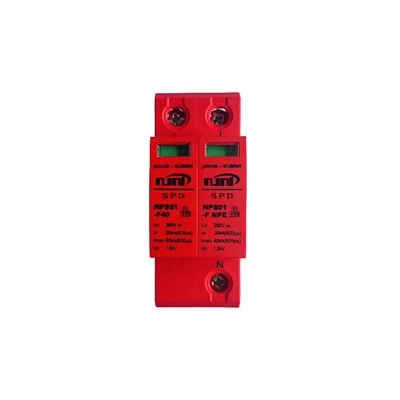
First, let’s get one thing straight: these protectors aren’t “set it and forget it” parts. I see so many installers slap one in a panel 5 years ago and never touch it again. That’s a mistake, and half the problems we get service calls for stem from that. Low-voltage DC (we’re talking 12V, 24V, 48V—common for solar, RVs, small scale power) surge protectors work by diverting extra voltage spikes to ground, right? But every time they do that, they wear a little. Over time, those diversion components (usually metal oxide varistors, or MOVs for short) break down, get clogged with debris, or just plain burn out. And here’s the kicker: a dead protector doesn’t always look like it’s dead. I’ve had customers tell me “my protector’s fine—its LED is on” and then we test it and it’s not absorbing any spikes at all. LEDs can die, too. Don’t take that single light as gospel.
Let’s start with the easiest, no-tools check: the visual deep dive (not just a glance). Most people look at the outside of the protector and call it good. I tell my clients to get a flashlight and lean in. First, check for physical damage on the casing. Not just cracks—though cracks that let moisture in are a huge red flag (moisture kills these things fast, and if the casing is split, the protector’s not sealed anymore, so it can’t do its job). Next, look for bulges or dents on the top or bottom. MOVs are ceramic disks, and when they die, they overheat, bulge, or even split open. I once had a customer with an RV that had a protector that looked totally normal from the front, but when I flipped it over, the back half was bulged out like a balloon—turns out it had absorbed a massive spike from a nearby lightning strike and had been sitting in there doing nothing for 3 months, ready to fail entirely. Also, smell it. If you get a whiff of burnt plastic or a chemical, that’s a dead giveaway. That’s the MOV burning out, and if you smell that, don’t even test it—swap it before it lets a spike through.
Next up, the functional check, which is super easy if you’ve got a multimeter—most people who work with solar or RV gear already own one, and if you don’t, they’re like $15 on Amazon. Wait, let’s make this simple: we’re testing two things, DC voltage through the protector, and the leakage current, which is how much voltage is escaping the protector when it’s supposed to be “blocking” spikes. First, make sure your system is powered off, and the protector is disconnected from both the positive and negative lines—never test it while it’s wired into the live system, that’s a safety hazard. Set your multimeter to the DC voltage setting (choose the range that matches your system—12V, 24V, etc.). Touch the multimeter leads to the LINE side of the protector (the side that comes from your power source, like a solar panel or battery) and the LOAD side (the side that goes to your gear). Now, read the number. If it’s exactly equal to your system’s DC voltage (e.g., 12V for a 12V system), that means the protector is conducting perfectly, which is what it should do in normal operation. If it’s reading 0V or way lower than your system voltage? That means the protector is shorted out—completely useless, can’t divert any spikes. If it’s reading higher than your system voltage? That means it’s leaking, and when a spike hits, it won’t be able to handle it because it’s already compromised. That’s another dead sign.
Wait, there’s a second multimeter check for leakage, which is even more specific to surge protectors. Set your multimeter to the microamp (µA) DC setting—this is for small currents. Now, touch one lead to the LINE side, and the other to the GND pin of the protector (the third pin that’s there to divert spikes to ground). A good protector will have a leakage current of less than 100 µA at normal operating voltage. If it’s reading over that? That means the MOV is starting to break down, and it’s not going to handle a spike when it comes. I see this all the time on protectors that are 3-5 years old—leakage creeps up slowly, so it’s hard to spot until it’s too late. A lot of folks wait until their gear dies, but this leakage check catches it before that.
Now, let’s talk about the “indirect signs” that people usually miss—stuff that’s happening to their gear, not the protector itself. This is huge because most people blame their solar panel or battery when their charge controller dies, but the real culprit is a dead surge protector. Here’s the tea: if you start seeing weird, random issues with your low-voltage DC gear that don’t have a clear cause, check your protector first. Like, your charge controller is resetting out of nowhere, your IoT sensor is glitching and sending wrong data, your RV’s battery is discharging faster than it should, or you had a nearby lightning strike (or even a big construction job near your property that caused power line spikes) and your gear died. Let’s say you had a thunderstorm last week, and your solar inverter stopped working. You replace the inverter, but then a month later, it dies again? That’s almost always a dead surge protector that didn’t absorb that first spike, so the next one fries the new inverter. I had a client with a small telecom setup for a remote camera—they had a spike, their 48V router died, they swapped it, and 2 weeks later it died again. We checked the surge protector, and it had completely failed to divert the spike the first time, so all that energy went straight to the router, and the second spike finished the job. That’s a super common mistake.
Also, let’s get real about age. I know there’s folks who say “my protector lasted 10 years!” and I’m not saying that’s impossible, but the average lifespan of a low-voltage DC surge protector is 5-7 years, depending on how many spikes it absorbs. If your protector is pushing 8 years old and you haven’t tested it? Go check it. Even if it looks fine, the MOVs degrade over time, even if they never absorbed a big spike. I always tell clients to treat this like a fire extinguisher—you don’t wait for a fire to check if it works, you check it every few years. Surge protectors are the same way.
Wait, what about resetable surge protectors? A lot of newer models have a reset button, or a thermal fuse that trips when the protector is overloaded. If your protector has a reset button, press it—if it doesn’t click back into place, or if it pops right back out, that means it’s dead. That’s a quick check you can do without a multimeter. But here’s the thing: not all protectors have reset buttons, so don’t rely on that as your only test.
Now, let’s bust a common myth I hear all the time: “If the protector looks good, it’s working.” Nope. Like I said earlier, I’ve seen protectors with no cracks, no bulges, a glowing LED, that are totally dead. The LED just means power is getting to it, not that it’s doing its job diverting spikes. The MOV could be so degraded that it can’t trigger when a spike hits, so the LED stays on, but your gear is exposed. That’s why the functional tests are non-negotiable.
Another big one: installation issues can make a perfectly good protector seem dead, so don’t jump to conclusions. I’ve had installers wire a protector backward, which means it’s not connected to the spike source at all—so it looks like it’s dead, but it’s just wired wrong. Or they didn’t ground the protector properly, so even a good protector can’t divert spikes. So if you test the protector and it seems off, double-check the wiring first, especially the ground connection. If the ground is loose or missing, that’s a problem, not the protector being bad.
Let’s wrap this up with what to do if you confirm your protector is bad, because I know once you spot it, you don’t want to wait to fix it. First, don’t just buy a random protector from Amazon—make sure it’s rated for your exact DC voltage (12V, 24V, 48V) and has the correct joule rating for your system. A protector rated for 1000 joules is fine for a small RV, but a solar array needs one rated for 5000+ joules. And make sure it’s UL-listed—cheap no-name ones might look the same, but they don’t work as advertised.
If you’re not comfortable testing this yourself, or if you want a second opinion, reach out. I work with solar installers, RV owners, small telecom operators, all kinds of folks who need reliable low-voltage DC surge protectors, and we help them test their existing gear and pick the right replacement if it’s bad. Don’t let a small dead protector turn into a $1000 mistake because you waited too long to check.

At the end of the day, the best way to avoid gear damage from power spikes is to catch a bad surge protector early. Skip the panic when your system acts up, grab a flashlight and a multimeter, do the quick checks we talked about, and you’ll save yourself a ton of hassle and cash. If you need help figuring out if your protector is bad, or if you’re looking for a quality replacement, feel free to connect with our team for a no-pressure chat about your setup.
T1 15KA Surge Protective Device References
Underwriters Laboratories (UL) 1449, Third Edition: Surge Protective Devices
Institute of Electrical and Electronics Engineers (IEEE) 1159: Recommended Practice for Monitoring Electric Power Quality
North American Board of Certified Energy Practitioners (NABCEP) PV Installation Professional Certification Requirements
Solar Energy International (SEI) “Electrical Safety for Solar Installers” Training Manual
Nanjing Ningpu Lightning Protection Equipment Manufacturing Co., Ltd.
As one of the most professional low voltage dc surge protector manufacturers and suppliers in China, we’re featured by quality products and good price. Please rest assured to buy customized low voltage dc surge protector made in China here from our factory. Also, pricelist is available.
Address: Building 1, No.20 Shengyuan Road, Lishui Economic Development Zone, Nanjing City, Jiangsu Province, China
E-mail: xuhaiyan@npspd.com
WebSite: https://www.npspd.com/
