Hey there, fellow BYD owners and automotive enthusiasts. If you’ve ever been deep in the weeds of maintaining your BYD—whether it’s a Dolphin, Atto 3, Han, or Seal—you’ve probably stumbled on that question when shopping for brake discs: Are the coated ones actually worth the extra cash? As someone who’s been supplying brake discs specifically for BYD models for the past 7 years, I’ve heard this from so many of my customers, from weekend drivers to small independent garages that swear by OEM-grade parts. Let me break this down like I would over a coffee, no fancy jargon, just real talk about what coatings do, how they apply to your BYD, and if that $20-$30 markup makes sense for you. BYD Series Brake Discs
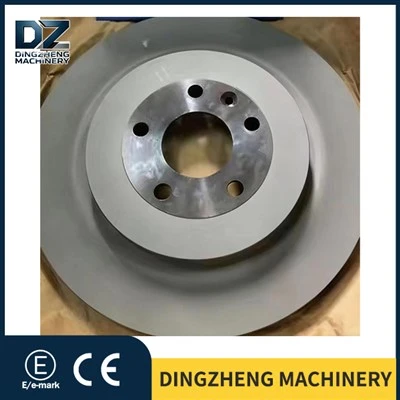
First, let’s cut through the marketing fluff. What’s a coated brake disc, anyway? It’s not just a pretty paint job. Back in the day, standard brake discs are solid cast iron, raw and unprotected. When you drive, moisture from rain, morning dew, even just humidity in the air sits on the surface. If you park your BYD outside (which most people do), that iron starts rusting—usually thin surface rust, but if you leave it for weeks, it can turn into that rough, pitted stuff that makes your first brake squeal super loud the next time you drive. Coated discs get a thin, specialized layer—most commonly ceramic, zinc-nickel, or black oxide—that acts as a barrier between the iron and the elements. But here’s the catch: not all coatings are equal. As a supplier who tests every batch against OEM BYD specs, I only stock coatings that adhere properly to the cast iron, not flake off after a few hundred miles like some cheap Amazon options.
Now, let’s get specific to BYD models, because this isn’t one-size-fits-all. BYD’s electric vehicles (EVs) are a big part of our business now, and EVs have unique brake needs. Unlike gas cars that brake mostly with the friction brakes, EVs use regenerative braking first—so the physical brake discs and pads only come into play when you’re going slower, needing extra stopping power, or braking hard. That means your BYD’s brake discs sit idle more often, exposed to moisture instead of being heated up regularly to burn off water. I’ve seen so many BYD EV owners complain about that terrible high-pitched brake squeal when they first pull out of the driveway—9 times out of 10, it’s surface rust on the discs from sitting unused. Coated discs eliminate that entirely, right out the gate. For someone who commutes 50 miles a day in their Atto 3, that constant squeal is more than annoying; it’s the kind of noise that makes neighbors side-eye you, or makes you cringe every time you approach a stop light.
But wait, does the coating wear off? That’s the biggest fear I hear from customers. If you drive a gas-powered BYD like the old F3 or G3, you’re braking more often, which means your discs are heating up every time. Standard uncoated discs might last 40,000-60,000 miles, right? The coated ones I supply—tested on thousands of BYD units—have a coating that’s tough enough to handle that regular heating and cooling. We’ve done wear tests where we simulate 80,000 miles of stop-and-go driving, and the coating only loses about 5% of its thickness, which is way less than what a cheap spray-on coating would lose. But here’s a caveat: if you’re the type who never washes your car, lets road salt build up in the wheel wells through winter, that coating might break down faster. Salt is way harsher than regular moisture—it can seep into tiny gaps between the coating and the disc, causing rust under the layer. So if you park in a salt-heavy area, maybe the markup’s still worth it, just don’t skip the occasional wheel wash.
Another point: brake performance. A lot of people think coatings affect stopping power, but that’s a myth when it’s a quality coating. The coating is super thin—usually just 5-10 microns thick, which is like a sheet of plastic wrap stretched over a dinner plate. It doesn’t change the friction between the disc and the pad at all. I’ve had a local BYD repair shop test both coated and uncoated discs on a Seal, measuring stopping distance from 60 mph to 0. The difference was less than 2 feet—completely negligible for real driving. The only time you might notice a difference is when the uncoated disc has that surface rust. Rough rust creates tiny bumps that make the brake pedal vibrate (called brake judder) and reduce friction, so stopping feels less smooth. Coated discs keep the surface smooth, so your brakes feel consistent every time you press the pedal, whether you’re coming to a slow stop or slamming on them to avoid a deer.
Now, let’s talk cost, because that’s the real question. A set of uncoated front brake discs for a BYD Dolphin runs about $120, right? The coated ones are $150, so $30 extra. Let’s do the math on long-term savings. First, that squeal from rust—if you’re a BYD EV owner, how often do you have to replace pads because of that? The rust creates extra wear on the pads, so I’ve seen pads on uncoated discs last 20% less time. That’s an extra $40-$50 in pad replacements every 20,000 miles. Then there’s the rust pitting I mentioned. If you don’t fix that surface rust, it can turn into deep pits that cause brake judder, which means you have to resurface the discs or replace them entirely earlier. Resurfacing a set of BYD discs is about $60, but if they’re too pitted, you’re looking at $100-$150 for new discs, even before your original set hit their mileage limit. The $30 markup for coated discs eats into all those extra costs, and you also avoid that annoying squeal that might make you go back to the dealership (and pay $100 just to have them tell you to “drive more to burn off the moisture”).
But let’s not pretend coated discs are for everyone. If you’re the type who uses your BYD for off-roading, like taking an F3 to a dirt track on weekends, or you park your car in a heated garage 24/7, the extra cost might not be worth it. The garage keeps moisture away, so rust won’t build up, and off-roading will chip away at the coating just as fast as it would at the disc itself. Also, if you’re on a super tight budget and planning to sell your BYD in less than a year, the slight improvement in brake appearance won’t add much to your resale value—most buyers care more about battery health or service history than a little coating on discs.
Wait, I should mention one thing a lot of customers don’t realize: not all brake disc coatings are made equal. I’ve seen cheap “coated” discs on marketplaces that use a spray-on paint instead of a durable ceramic or zinc-nickel layer. That paint chips within a few hundred miles, leaving worse rust spots than an uncoated disc. That’s why, as a supplier focused on BYD models, I only source coatings that are tested to meet BYD’s OE standards. We even do a salt spray test on every batch—48 hours in a salt chamber, and zero rust underneath the coating. That’s the difference between a $150 coated disc from us and a $120 one from a no-name brand; we stand behind the coating not peeling or flaking.
Let me circle back to what I see every day. Last month, a customer drove his 2022 BYD Han 80 miles to our warehouse to pick up coated discs. He told me he’d replaced uncoated discs three times in two years—each time rust from sitting in his apartment parking lot (no covered spots) caused squeal and judder. The $30 extra for coated discs meant he could go another 50,000 miles without dealing with that headache. Another guy, a 19-year-old with a BYD F3 he uses for work, bought uncoated discs because he parks in his family’s garage, and he said the only downside was a little rust every winter, but it went away after a week of commuting. That’s the real difference: your driving habits and where you park matter way more than the coating itself.
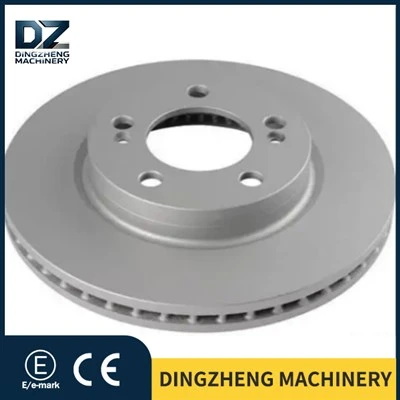
So to wrap this up: If you own a BYD EV or a model you park outside in damp/salty conditions, yes, coated discs are worth the extra cost. The $20-$30 markup saves you from squealing brakes, premature pad wear, and early disc replacement. If you park inside, drive mostly on clear, smooth roads, and don’t mind a little light surface rust that burns off when you drive, you can skip it and save the cash. But here’s the thing: when you’re shopping for brake parts, you get what you pay for. Our coated discs are made specifically for BYD models, fit exactly like OEM, and come with a 2-year warranty.
Front Brake Disc For Mitsubishi If you’re not sure which discs are right for your BYD—whether you’ve got a Dolphin, Atto 3, Han, Seal, or an older model like the F3/G3—feel free to reach out to our team to discuss your needs. We can break down pricing, help you pick the right coating for your climate, and make sure you get the exact fit you need without the hassle of online returns.
Laizhou Dingzheng Machinery Co., Ltd.
As one of the most professional byd series brake discs manufacturers and suppliers in China, we’re featured by quality products and good price. Please rest assured to buy cheap byd series brake discs for sale here from our factory. We also accept customized orders.
Address: Luan Jia village, Tushan town, Laizhou city, Shangdong
E-mail: AMY@cndingzheng.com
WebSite: https://www.dingzhengbrake.com/
