If you’ve ever stood in a ski resort rental shop, staring at a rack of neon, ill-fitting snowboard pants that either left your legs shivering at the first powder drift or soaked through by lunch, you know how much the right pair can make or break a day on the mountain. As a snowboard pants supplier who’s spent the last 12 years testing gear with riders from backcountry powder hounds to terrain park regulars, I’ve seen every bad pick imagin: pants that ride up when you carve, that get snagged on boot buckles, that breathe so badly you’re dripping sweat before you even hit the first chairlift, and that fade after one season of sitting in a gear closet. Picking the right snowboard pants isn’t just about grabbing the priciest pair or the one with the coolest logo—it’s about matching the gear to where you ride, how you ride, and what you actually need to stay comfortable all day. Let’s break this down the way I do when I’m walking a new rider through our catalog, no confusing jargon, just real stuff that works. Snowboard Pant
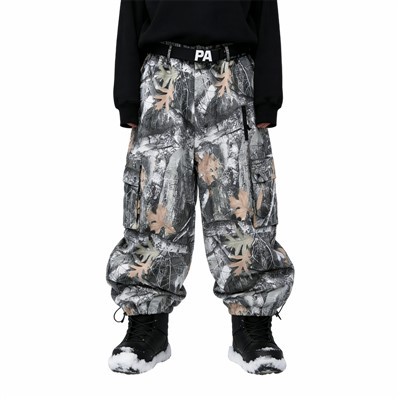
First, start with the most obvious, yet most overlooked: waterproofing. This isn’t just a number you see on a tag—it’s a measure of how well the pants will keep moisture out, and it’s the line between a great day and a soggy, miserable one. I’ll be straight: if you’re riding in places that see more than a light dusting—think Pacific Northwest resorts, the Rockies in spring, or any backcountry zone where you might posthole—you need a rating of at least 10,000 mm. That 10,000 mm means the fabric can hold back 10,000 millimeters of static water pressure before it starts leaking, which translates to about 10 hours of light snow and wind without a single drip. For those of you who ride deep powder or spend all day in slushy spring conditions, bump that up to 15,000 mm. I’ve had riders tell me they bought pants with a 5,000 mm rating thinking it would be enough, only to come off the mountain with water seeping through the seams after an hour of standing in a lift line during a snowstorm. The thing about waterproof ratings is that the “hydrostatic head” number only tells part of the story—you also have to consider the taping on the seams. Even a 20,000 mm pair is useless if the crotch seam isn’t fully taped, because that’s where water will seep in first when you bend or move. That’s why all the pants we supply have fully taped critical seams; I learned that lesson early, when I tested a sample pair that had taped shoulder seams but open side seams, and ended up with ice in my socks halfway through a day at Whistler.
Next up is breathability, and this is where a lot of riders cut corners, or just don’t realize why it matters. Snowboarders move a lot—we’re bending, crouching, jumping, hiking to a backcountry spot, all while wearing multiple layers. If your pants don’t let that sweat escape, it gets trapped against your skin, cools down, and makes you cold even if the outside temp is 30 degrees. Breathability is measured in grams per square meter per 24 hours (g/m²/24h), and for snowboard pants, you want a minimum of 5,000 g/m²/24h. For riders who are more active, like backcountry tourers or park riders who are constantly moving, 8,000 g/m²/24h is ideal. I always tell people not to overdo it here—you don’t need a pair with 15,000 g/m² breathability unless you’re a competitive snowboarder doing high-intensity runs all day. That extra breathability usually means a more expensive fabric that might not be as durable for everyday use. It’s a balance: you want enough breathability to keep sweat from building up, but not so much that you’re sacrificing waterproofing. The fabric technology has come a long way in the last decade; we now use fabrics that balance both, so you don’t have to choose.
Then there’s insulation, and this is the biggest point that separates pants made for cold days from ones for variable conditions. A lot of beginners think all snowboard pants have to be puffy and thick, but that’s not true. It depends on what temperature you ride in, and how much you run hot or cold. If you only ride in temperatures below 20 degrees Fahrenheit, or you’re someone who gets cold easily, insulated pants are the way to go. Insulation is measured in grams as well—usually 60g, 80g, or 100g of synthetic insulation (or down, though down is less popular for snowboard pants because it loses loft when wet). Synthetic insulation is better for snow gear because it stays warm even if it gets damp, which is inevitable when you’re moving around. For cold, dry mountain days, 80g insulation is perfect; for bitter cold, 100g works. But if you ride in temperatures above 30 degrees, or you run hot (like most park riders who are moving nonstop), you don’t need insulation at all. Shell pants—pants with no built-in insulation—are way more versatile here. You can add your own base and mid layers, so if it warms up, you can peel off a layer, or if it gets cold, you add a pair of wool leggings. Shell pants also tend to be lighter and more flexible, which is a huge plus for people who do tricks or hike. I see a lot of intermediate riders make the mistake of buying insulated pants because they think that’s what “snowboard pants” are, only to be sweating through their thighs on a 40-degree day. It’s all about matching insulation to your riding style and the conditions you face most often.
Fit is next, and it’s way more important than you think. I’ve had so many customers come back saying their pants are too long, too baggy, or ride up when they bend over, and it ruins their whole day. Let’s start with length: your pants should hit the top of your boot, not cover the laces, and not be so long that you’re tripping over them when you walk. A pair that’s too long will get snow in your boots every time you take a step, and when you’re snowboarding, if the pant leg is too long, it will bunch up around your bindings and throw off your balance. Next is the waist: you want a waist that has some adjustability—elastic sides, velcro straps, or a removable belt. If your waist is too loose, your pants will slide down when you bend over, and snow will get in the back. If they’re too tight, you can’t bend your knees enough to get into a snowboard stance. The leg fit is also key: you have to decide between slim fit, regular fit, or baggy fit. Slim fit is good for people who layer under their pants or prefer a more modern look; it’s not too tight, but it’s trim enough that you don’t have extra fabric getting caught on boots or bindings. Regular fit is the most popular, works for most body types, gives you enough room to move, and isn’t too bulky. Baggy fit is for riders who like the 90s style, or who want extra space to layer, but it can be a problem if it’s too baggy—extra fabric means more places for snow to get in, and it can slow you down when you’re doing tricks. I always recommend going for a regular fit if you’re unsure; it’s versatile and works for almost every riding style. Also, pay attention to the thigh and knee room—you need enough room to bend your knees deeply for turns, so if the pants feel tight in the knee when you’re standing, they will be unbearable when you’re on the board.
Small details make the biggest difference on the mountain, so don’t sleep on these. First, pockets: you want pockets that are waterproof, not just regular fabric pockets that will soak through if you fall in snow. Look for zippered pockets, preferably with storm flaps over the zippers—those are for your phone, wallet, lip balm, and lift pass. The last thing you want is to drop your phone in a pocket that’s not sealed, or have your lift pass fall out while you’re rushing to get on a chairlift. Another detail is gaiters, the fabric or rubber part at the bottom of the pant leg that wraps around your boot. Good gaiters will have a gripper elastic or a Velcro strap that fastens under your boot, so snow can’t get in the top of your boot. Cheap pants have thin gaiters that fall apart after one season, so look for reinforced ones. Zippered pant legs are another great feature—if you’re taking layers on or off, or if you need to get your boots off quickly at the end of the day, side zippers that go all the way up the thigh make it way easier. If you ride backcountry, you might want pants with a reinforced butt and knee area, because those are the parts that hit the snow most when you fall, or when you’re sliding down to pick up a dropped board. Reinforcement also adds durability, so your pants will last longer even if you’re a hard rider. And don’t forget venting—underarm vents are common in jackets, but many good snowboard pants have thigh vents. These zippers on the inside of the thigh let hot air escape when you’re moving fast and getting sweaty, and you can zip them up when it’s cold. That’s a game changer for spring riding, when the sun is out and you’re overheating but it’s still cold enough to get a chill if you stop.
Now, let’s tie this all together with examples, because I know it’s easy to get overwhelmed. If you’re a beginner who rides at the resort on weekends, usually in temperatures between 25 and 40 degrees, and you like having the option to layer, go for a regular fit shell pant with a 10,000 mm waterproof rating and 5,000 g breathability. Add in adjustable waist, zippered waterproof pockets, and gaiters, and that’s all you need. You don’t need insulation, because you can add your own mid layer when it’s cold. If you’re a backcountry rider who hikes a lot and rides in deep powder, go for a slim to regular fit insulated pant with 80g synthetic insulation, 15,000 mm waterproofing, 8,000 g breathability, reinforced knees and butt, and side zippers to vent when you’re hiking. If you’re a park rider who is always moving, jumping, and falling, go for a baggy or regular fit pant with 10,000 mm waterproofing, lightweight insulation or no insulation, and sturdy gaiters to keep snow out.

At the end of the day, the best snowboard pants are the ones that fit your specific needs, not the ones that have the highest numbers or the biggest name brand. I’ve been supplying snowboard pants for years, and I’ve seen riders come back season after season for pairs that work for their style, not because they spent a fortune. If you’re still not sure what to pick, don’t hesitate to reach out. We work with riders of all levels, from beginners just buying their first pair to pro riders testing gear, and we can help you find exactly what you need, no pressure, no confusing sales talk. Ready to find the right pair for your riding, or want to learn more about our line of snowboard pants for all conditions? Reach out to start a conversation about what works for you.
Custom Outdoor Softshell Jackets References
- International Organization for Standardization. Textiles – Determination of hydrostatic resistance. ISO 811:2018.
- International Organization for Standardization. Textiles – Determination of water vapour transmission rate of fabrics. ISO 11092:2014.
- American Society for Testing and Materials. Standard specification for performance of ski apparel. ASTM F2008-18.
- Backcountry Access. Backcountry Snow Gear Performance Guidelines. 2022.
Onroad Sportswear Co., Ltd.
We’re well-known as one of the leading snowboard pant manufacturers in China, featured by quality products and good service. Please feel free to buy customized snowboard pant made in China here from our factory. Also, samples are available.
Address: No.501, A Block, Longtian Industry Area, Shilong, Dongguan, Guangdong, PRC. China
E-mail: Tracy.yi@onroad-sports.com
WebSite: https://www.orsoutdoor.com/
