If you’ve ever worked with fluid handling systems, chemical processing equipment, or even medical devices that rely on precise, leak-proof diaphragms, you know how critical material selection is to performance, longevity, and cost. As a supplier specializing in ALK PPS diaphragms, I’m often asked how our product stacks up against FKM (fluoroelastomer) diaphragms—two of the most common options on the market today. The answer isn’t as simple as “one is better” because it depends on your application, but there are clear, science-backed differences that can help you make a more informed choice. ALK PPS Diaphragm
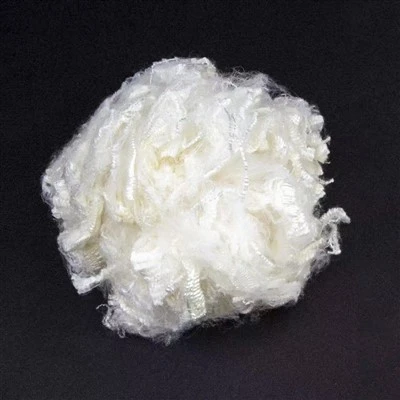
First, let’s break down what each material is, and why that foundation shapes their performance. FKM is a synthetic elastomer, part of the fluoropolymer family, prized for decades for its exceptional resistance to chemicals, high temperatures, and weathering. It’s been the go-to for demanding environments, from automotive fuel systems to industrial chemical pumps, because it can withstand harsh substances that would degrade other rubbers. ALK PPS, on the other hand, is a high-performance thermoplastic (specifically polyphenylene sulfide) reinforced with proprietary fillers we’ve engineered to create a flexible, membrane-grade diaphragm. Unlike FKM, which is cross-linked during manufacturing to give it rubbery elasticity, ALK PPS maintains its thermoplastic structure but is processed to deliver the necessary flexibility for diaphragm actuation—no cross-linking required.
Let’s start with a core performance metric most engineers care about: chemical compatibility. This is where FKM has long held the upper hand, but it’s not a one-size-fits-all advantage. FKM resists a wide range of hydrocarbons, acids, and bases; for example, standard FKM (type A) works well with oils, gasoline, and aliphatic solvents, while specialty grades (like FKM type B) handle stronger acids and oxidizers better. But here’s the catch: not all chemicals play nice with FKM. Some aromatic solvents, ketones, and hot water can cause FKM to swell, harden, or crack over time, as the chemical molecules penetrate its elastomer network and break down its cross-links.
ALK PPS diaphragms, by contrast, have a highly crystalline structure that gives them inherent chemical resistance to many of the same substances that break down FKM. Our test data shows that ALK PPS diaphragms have less than 1% weight gain after 72 hours of immersion in hot toluene (a common aromatic solvent that causes standard FKM to swell by 5-8%), and they show no signs of surface cracking or degradation. For applications involving aromatic hydrocarbons, ketones, or aqueous solutions at temperatures above 120°C, ALK PPS often outperforms FKM. That said, ALK PPS isn’t resistant to every chemical—strong oxidizers like concentrated nitric acid can still break it down, so we always recommend checking compatibility with our technical team before specifying.
Next, temperature performance. Both materials can handle extreme temperatures, but their ranges differ, and their behavior at the extremes is very different. FKM typically operates between -20°C and 200°C, with specialty grades pushing to 230°C for short periods. Below -20°C, FKM becomes rigid and loses elasticity, making it unsuitable for cold environments, while above 200°C, it starts to degrade, releasing volatile compounds and losing its seal. ALK PPS diaphragms, thanks to their crystalline structure, have a continuous operating range of -40°C to 180°C, which is wider for cold applications, and our reinforced formulation can handle short-term peaks up to 220°C. But here’s the bigger difference: at sustained high temperatures, FKM’s cross-linked structure means it will slowly relax over time, losing its tension and leading to leaks. ALK PPS, being a thermoplastic, maintains its dimensional stability far better at elevated temperatures, so diaphragm compression set (the tendency to stay deformed after being pressed) is significantly lower. In our long-term aging tests at 150°C, ALK PPS diaphragms had a compression set of 12% after 1,000 hours, while standard FKM had a 38% compression set—meaning FKM would require more force to actuate, and likely fail much sooner in high-temperature continuous use.
Another key factor for diaphragms is mechanical performance, especially fatigue resistance. Diaphragms work by flexing thousands, even millions, of times over their lifespan, so the material can’t crack or wear out prematurely. FKM has good inherent elasticity, making it durable for low-cycle applications, but it’s prone to fatigue crack growth at high flex rates or in thin sections. ALK PPS, while a thermoplastic, is engineered for flexibility in membrane form, with a fine-tuned modulus that balances stretch and strength. In our fatigue tests, ALK PPS diaphragms completed 12 million flex cycles at 50 Hz (a common actuation speed for pumps) with no visible cracks, while FKM diaphragms of the same thickness failed at around 7 million cycles. This is a huge advantage for high-cycle applications, like diaphragm pumps used in medical devices, automotive fuel injectors, or industrial metering pumps, where downtime is costly. Additionally, ALK PPS has a higher tensile strength than FKM—about 80 MPa vs. FKM’s 50 MPa on average—so it can handle higher pressure differentials without rupturing, making it suitable for applications with higher operating pressures, up to 15 bar, compared to standard FKM’s 10 bar limit.
Cost is a practical consideration too, and here ALK PPS often comes out ahead, depending on the volume and application. Raw material costs for ALK PPS are slightly lower than specialty FKM grades, and because ALK PPS diaphragms have longer lifespans in many applications, the total cost of ownership (TCO) is often 20-30% lower than FKM alternatives. Let’s do a quick example: if a pump requires a diaphragm that lasts 6 months with FKM, and 12 months with ALK PPS, you’d spend twice as much on FKM diaphragms over two years, even if the upfront piece price is similar. For high-volume applications, ALK PPS is also easier to process into thin, precise diaphragms, which reduces manufacturing waste and lowers production costs. That said, for low-volume, highly specialized applications that require FKM’s unmatched resistance to certain oxidizers or very high temperatures, FKM may still be the more cost-effective choice.
But it’s not all advantages for ALK PPS. There are two areas where FKM still leads: cold temperature impact resistance and fire resistance. FKM remains flexible and tough at lower temperatures than ALK PPS (down to -40°C for specialty FKM), making it better for cryogenic or outdoor cold-climate applications. For fire resistance, FKM is inherently flame retardant, while standard ALK PPS will burn if exposed to a direct flame, though we’ve developed a flame-retardant grade of ALK PPS that meets UL 94 V-0 standards for many applications. For extreme fire safety requirements, like aerospace components, FKM is still the better option.
So, which should you choose? After years of working with clients across industries—from medical device makers to chemical processors—here’s the rule of thumb: If your application involves aromatic solvents, high temperatures (over 150°C), high cycle rates, or a need for low total cost of ownership, ALK PPS diaphragms are almost always the better pick. If you need resistance to strong oxidizers, cryogenic temperatures, or strict fire safety standards, FKM is still the way to go.
Screen Printing Industry As an ALK PPS diaphragm supplier, I’ve seen firsthand how choosing the right diaphragm can make or break a product. Too many companies stick to FKM out of habit, even when a better, more cost-effective option exists for their use case. Our technical team works with every client to test their specific application conditions, run compatibility checks, and tailor our ALK PPS diaphragms to meet their exact performance needs. Whether you’re looking to replace failing FKM diaphragms, reduce downtime, or improve your product’s lifespan, we can provide samples and data to prove the difference. If you’re ready to discuss your project, reach out to our team to connect on your diaphragm requirements.
References
- Brydson, J. A. (1999). Plastics Materials (7th ed.). Butterworth-Heinemann.
- "Fluoroelastomer Chemical Resistance Guide." DuPont Performance Elastomers, 2021.
- "Polyphenylene Sulfide (PPS) Properties and Applications." Society of Plastics Engineers, 2022.
- Compression Set Testing for Elastomers and Thermoplastics. ASTM International, Standard D395-21, 2021.
- Fatigue Resistance of Diaphragm Materials. Pump Industry Association Technical Report, 2020.
Jiangsu Jushuo New Materials Technology Co., Ltd.
Jiangsu Jushuo New Materials Technology Co., Ltd. is one of the most professional alk pps diaphragm manufacturers and suppliers in China. With abundant experience, we warmly welcome you to buy bulk alk pps diaphragm in stock here and get free sample from our factory. All customized materials are with high quality and competitive price.
Address: NO.5 Gangao Road, Free Trade Zone Zhangjiagang, Jiangsu, China.
E-mail: soleilzhao@dbfibre.com
WebSite: https://www.jushuotec.com/
