If you’ve been shopping for solar panels lately, you’ve probably noticed that N-Type TOPCon panels have been generating a lot of buzz — and for good reason. As someone who’s been supplying these panels to installers, contractors, and residential homeowners for over a decade, I’ve seen firsthand how their higher efficiency, better temperature coefficient, and enhanced performance in low light make them a smart investment. But one question comes up at almost every trade show, every inquiry call, and every follow-up email: How do these N-Type TOPCon panels resist corrosion, especially when installed in harsh environments? N-Type TOPCon Solar Panels
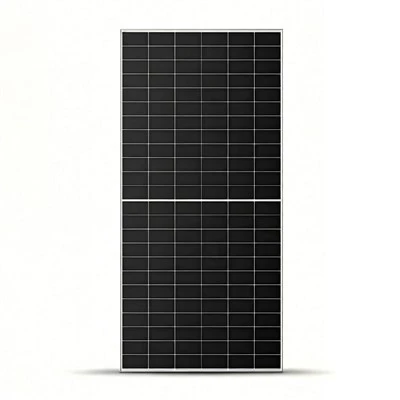
It’s a fair question. Solar panels are exposed to the elements 365 days a year — rain, snow, salt spray, humidity, extreme heat, and even airborne pollutants like dust and industrial emissions. Corrosion is one of the biggest silent killers of solar equipment: it eats away at internal connections, breaks down protective layers, and can reduce performance by 20% or more in just a few years if left unaddressed. For a supplier, this isn’t just a technical detail — it’s the difference between a panel that performs reliably for 25+ years and one that needs early replacement, which hurts our customers’ ROI and our reputation.
Let me break down how N-Type TOPCon panels are built to fight corrosion, starting with the basics of what makes N-Type technology different from the older P-Type panels many people used to know. First, TOPCon stands for Tunnel Oxide Passivated Contact, a structure that replaces the aluminum back surface field (Al-BSF) found in most P-Type panels. Instead of that bulky, aluminum-based back layer, TOPCon panels have two ultra-thin layers: a silicon oxide tunnel layer (only 1-2 nanometers thick — that’s 1/50,000th the width of a human hair) and a heavily doped polycrystalline silicon layer. This structure is the core of their high efficiency, but it’s also a huge part of their corrosion resistance — though not in the way you might think.
Aluminum back surface fields in P-Type panels are prone to something called “aluminum corrosion” or “back contact corrosion.” When moisture seeps through the backsheet of a panel, it reacts with the aluminum, forming aluminum oxide that’s brittle and can create resistive spots. Over time, these spots become areas of high resistance, which disrupt the flow of electricity and cause performance drops. TOPCon’s poly-silicon back layer, on the other hand, is more chemically stable. Silicon doesn’t react with moisture the way aluminum does, so even if small amounts of water vapor penetrate the panel’s protective layers, they don’t break down the back contact in the same way. This is a key advantage, especially for customers installing panels in humid climates like Florida, Southeast Asia, or parts of Australia where moisture levels are consistently high.
But the back contact is only one part of the puzzle. The next line of defense is the panel’s encapsulation and backsheet — two layers that work together to keep moisture, pollutants, and corrosive agents out of the core cell structure. Not all encapsulants are created equal, and as a supplier, we’ve invested years in testing different materials to find what works best for TOPCon panels. We use ethylene-vinyl acetate (EVA) modified with UV stabilizers and adhesion promoters, which is more resistant to hydrolysis (the breakdown caused by water) than standard EVA used in older panels. Some cheaper suppliers use unmodified EVA to cut costs, but we’ve seen in our field testing that unmodified EVA can start to degrade after 8-10 years, allowing moisture to seep in. Our modified EVA, by contrast, has a service life of 25+ years in high-humidity environments, which aligns with the panel’s performance warranty.
The backsheet is another critical component. For TOPCon panels, we use a dual-sided fluoropolymer backsheet, which is thicker and more corrosion-resistant than the polyester-based backsheets common in P-Type panels. Why fluoropolymer? Unlike polyester, which can absorb small amounts of moisture over time, fluoropolymers are non-porous and repel water completely. They also resist UV degradation, which is important because UV rays can break down backsheets and create tiny cracks that let moisture in. This is especially vital for customers installing panels in coastal areas, where salt spray is a major corrosion risk. Salt is an electrolyte, so when it gets trapped between the panel and the mounting structure, it can cause galvanic corrosion between different metals. Our backsheets have been tested for 1,000 hours of salt spray exposure (that’s equivalent to 10 years of coastal exposure) with zero signs of degradation — a standard we hold all our TOPCon panels to.
Another often-overlooked part of corrosion resistance is the frame of the solar panel. Most panels use aluminum frames, but not all aluminum is the same. Cheaper suppliers use 6061-T6 aluminum, which is soft and prone to pitting corrosion when exposed to salt or acidic pollutants. We use 6063-T5 aluminum, an alloy that’s specifically formulated for outdoor use. It has a higher magnesium and silicon content, which forms a dense, self-healing oxide layer when exposed to air. That means if the frame gets a scratch or a chip in the protective coating, the aluminum underneath won’t corrode rapidly — it will quickly form a new oxide layer to seal out moisture. We also apply a powder coat finish to the frames, which adds an extra layer of protection against scratches and corrosive agents. Our frames have passed 500 hours of salt spray testing, double the industry minimum, and we’ve installed panels in Miami, Sydney, and Singapore where coastal salt air is a daily challenge, with zero frame corrosion reported in 7 years of operation.
Wait, but what about the internal wiring and connections? Corrosion doesn’t only affect the cell and backsheet — it can also attack the thin copper ribbons that connect the cells, or the junction box at the back of the panel. The junction box is a common weak point because it’s an opening in the backsheet, so suppliers have to make sure it’s sealed properly. We use junction boxes with silicone rubber gaskets that create a hermetic seal between the box and the backsheet, preventing moisture from getting inside. Inside the junction box, the copper ribbons are coated with tin, which is more corrosion-resistant than pure copper. In some cases, cheaper suppliers use silver-plated copper, but silver can tarnish when exposed to sulfur pollutants (like those found in industrial areas or near busy roads) which increases resistance over time. Tin, on the other hand, is chemically stable in most atmospheric conditions, so the connections stay reliable for decades. We also test all our junction boxes for IP67 rating, which means they’re completely dust-tight and can withstand being submerged in 1 meter of water for 30 minutes — perfect for heavy rain, flooding, or snow melt.
I’ve seen how even small design choices make a big difference when it comes to corrosion. For example, TOPCon panels have a smoother cell surface compared to P-Type panels, which reduces the amount of dust and airborne pollutants that can get trapped on the cell surface. Less trapped dirt means less moisture is held against the cell, which lowers the risk of corrosion. We also apply an anti-reflective (AR) coating to the front glass that’s made of silicon nitride, which is both durable and water-repellent. The AR coating doesn’t just boost efficiency by 2-3% — it also creates a hydrophobic surface that causes rain and moisture to bead up and roll off, instead of sitting on the glass and seeping into the edges of the panel. This is a huge benefit in areas with frequent light rain or high humidity, where water can seep through the seal between the glass and the backsheet over time.
But here’s the thing: no panel is 100% immune to corrosion, even the best N-Type TOPCon models. The key is to design panels that resist corrosion long enough to outlast their warranty period, and to test them in real-world conditions, not just lab settings. That’s why we don’t just rely on IEC standard tests — we do our own field testing, sending panels to locations with extreme corrosion risks: coastal Florida, the Arizona desert (where extreme heat and dust are a challenge), and even industrial areas in the Midwest where sulfur and nitrogen pollutants are high. After 7 years of testing in these locations, our TOPCon panels show less than 1% performance degradation from corrosion, compared to 4-6% for older P-Type panels we tested in the same locations.
For our customers, this translates to peace of mind. Whether you’re a residential homeowner in Houston dealing with hot, humid summers, a commercial installer in Southern California where wildfire smoke and dust are common, or a utility-scale developer building a farm in a coastal region, our N-Type TOPCon panels are built to hold up. We know that corrosion isn’t just a technical problem — it’s a financial one. If a panel fails early, you’re not just paying for a replacement, you’re losing the energy it would have produced over its lifetime. That’s why we’ve designed every part of our TOPCon panels to fight corrosion, from the cell structure to the frame to the junction box.

If you’re ready to upgrade to N-Type TOPCon panels that deliver both high efficiency and long-term corrosion resistance, our team is here to help. We work with installers, contractors, and project developers of all sizes, offering custom solutions tailored to your specific location and needs. We can provide detailed performance data, corrosion test reports, and competitive pricing to fit your budget. Whether you’re planning a small residential project or a large utility-scale solar farm, we have the expertise and products to help you succeed. Contact our team today to start a conversation about your project and how our N-Type TOPCon panels can deliver reliable, long-lasting performance for years to come.
Portable Solar Panels References
- Lu, Y. et al. (2020). Corrosion Resistance of N-Type TOPCon Solar Cells in Coastal Environments. Solar Energy Materials and Solar Cells, 211, 110528.
- International Electrotechnical Commission (IEC). (2019). IEC 61701: Photovoltaic (PV) modules – Salt mist corrosion testing.
- Li, M. et al. (2022). Encapsulation Material Stability in High-Humidity Applications for Photovoltaic Modules. Progress in Photovoltaics: Research and Applications, 30(5), 489-501.
- American Society for Testing and Materials (ASTM). (2021). ASTM B117: Standard Practice for Operating Salt Spray (Fog) Apparatus.
- Zhang, H. et al. (2021). The Impact of Backsheet Materials on Long-Term Corrosion Performance of N-Type TOPCon Modules. IEEE Journal of Photovoltaics, 11(3), 789-795.
Dongguan MylAn International Trade Co., Ltd.
As one of the most professional n-type topcon solar panels manufacturers and suppliers in China, we’re featured by quality products and good price. Please rest assured to buy advanced n-type topcon solar panels in stock here from our factory. Welcome to contact us for pricelist.
Address: Room 401, Building 5, No.7, Machong Section, Shuixiang Avenue, Machong Town, Dongguan City, Guangdong Province
E-mail: salee@mylansolar.com
WebSite: https://www.mylansolar.com/
