If you’ve ever browsed a gallery of bronze memorials, wandered a historic city square, or even visited a celebrity memorabilia convention, you’ve likely encountered life-sized or smaller bronze figures of famous people. But if you’ve ever asked the difference between a replica and a cast of these works, you’re not alone—this is one of the most frequent questions our team gets at Bronze Replicas Of Famous People, and it’s one that trips up a lot of casual admirers, collectors, even museum curators sometimes. For years, I’ve walked through bronze foundries, watched skilled artisans work with molten metal, and answered this question over and over, and let me tell you: it’s not just a technical detail. It’s about history, craftsmanship, intent, and value—all things that matter when you’re looking to add a bronze piece of a famous person to your collection, memorial, or public space. Bronze Replicas Of Famous People
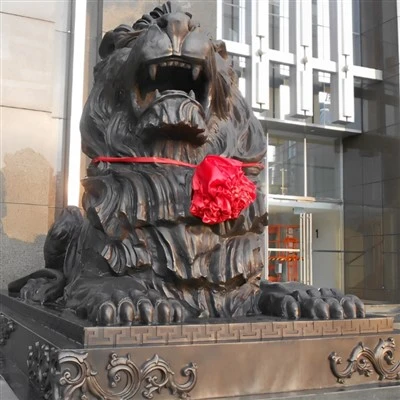
Let’s start with basics, because both terms get thrown around interchangeably these days, and that’s where the confusion starts. When a famous artist creates a bronze figure of another famous person (say, Auguste Rodin’s The Thinker or the statue of Abraham Lincoln in the Lincoln Memorial), that original work isn’t a single piece. Bronze sculptures are almost always made using a process called the lost-wax method, or more recently, sand casting—but the core of creating multiple bronze pieces from one original is rooted in capturing the exact form the artist or sculptor worked to perfect. The key difference between a cast and a replica lies in how that form is created, and who has the right to make it.
First, let’s talk about casts of famous people’s bronze figures. A cast starts with the original sculpture. When an artist finishes a piece, they create a mold—usually a flexible material like latex or silicone, pressed directly onto the original bronze (or sometimes a plaster cast of the original, if the bronze is too valuable to handle repeatedly) to capture every tiny detail: a wrinkle in a coat, the curve of a cheek, the texture of hair. Once the mold is set, molten bronze is poured in, cooled, and removed, producing an exact duplicate of the original. For pieces created before the late 20th century, casts are the authorized duplicates made by or under the direct supervision of the original artist, or their estate, or a foundry that holds the exclusive rights from the estate. That’s why you’ll see little numbered stamps on historic bronze casts—like “8/12” or “15/20”—that mean this is the 8th of 12 authorized casts, or 15th of 20, from a limited edition the artist approved. Those are the casts that end up in major museums, city landmarks, and private collections with significant provenance.
Not all casts are limited, though. For very large, public figures (like the statue of George Washington in New York’s Union Square), sometimes the original artist or their estate will authorize multiple casts to be made for different locations across the country. These are still casts, because they’re made directly from the original mold, but they’re not part of a small, numbered limited edition—instead, they’re produced to fill public demand for the same work in different spaces. The thing that defines a cast, no matter the edition size, is that it is made from the original form created by the artist, using the exact mold that captures every detail of the original work. There’s no guesswork here; a cast is meant to be as close to identical to the original as humanly possible.
Now, what’s a replica? This is where things shift, and where most of the confusion happens, because modern replicas often bear a surface-level resemblance to famous bronze figures, but they’re not made from the original mold, and they’re not authorized by the artist or their estate. Let’s use a concrete example: if Rodin created a 10-inch bronze The Thinker in 1902, and his estate authorized 15 casts of that small piece, those 15 are casts. A replica of The Thinker, though, would be a new piece made by taking a photograph of Rodin’s work, or a general sketch, or even a cheap mass-produced plastic copy, and using that as a template to carve a new form, make a new mold, and cast it in bronze. There’s no original mold, no direct link to the artist’s original work—just a recreation that’s similar in size and appearance, but not an exact duplicate of the original.
For our team at Bronze Replicas Of Famous People, this distinction is central to how we do business. We work with clients ranging from small historical societies looking for a statue of a local 19th-century abolitionist, to private collectors wanting a piece of a famous 20th-century actress, to hotels wanting a statement piece in their lobby. Early on, we made the mistake of calling all our works “replica statues” and we quickly learned that was misleading. A local historical society came to us wanting a bronze of Frederick Douglass for their town square; they’d seen a cheap online listing for a “Frederick Douglass replica” that was 20% the size of the original statue in Washington D.C., and they realized too late it didn’t capture the dignified posture, the exact height of the original coat, or even the correct features of Douglass. When they came to us, we explained that if they wanted a piece that matched the original (as close as possible, without being an authorized cast—because none of the Douglass estate’s molds are available for sale), we create a cast replica? Wait, no—let’s clarify that middle ground, because that’s where most of our work falls, and it’s important to get that right.
Wait, I said a minute ago that a cast uses the original artist’s mold, but for many famous people, especially those whose estates are still active, or whose original molds are lost, damaged, or held in a museum, you can’t get the exact original mold. So what do we do when a client wants a bronze that’s as accurate as possible, but isn’t an authorized cast? That’s when we create what’s called a custom accurate reproduction—a piece that draws from the historical original, uses primary sources (photographs, newspaper clippings, estate records, even measurements of the person taken during their lifetime if they exist) to capture exact proportions, posture, and features, then carves a new, custom form, makes a new mold, and casts it in bronze to exacting standards. But here’s the thing: that’s not a cast, and it’s not a replica in the cheap, mass-produced sense. It’s a custom, historically accurate bronze work, but that’s where the terms start to blur for modern, commercially made bronze figures.
Let’s go back to the technical definition to ground this, because it’s not just a matter of opinion. According to the Association of International Bronze Sculptors, a cast is “a three-dimensional work produced by pouring molten metal into a mold taken directly from an original artwork, resulting in a work that is identical in form and detail to the original.” A replica, by contrast, is “a work that copies the form of an existing artwork, but is produced from a new mold created from observation, measurement, or secondary sources, rather than the original mold.” That’s the official line, and it’s one that we’ve used to shape our entire process at Bronze Replicas Of Famous People over the past 12 years.
I remember a client three years ago: a widow whose husband had been a well-known civil rights attorney, famous in his city for his work in the 1970s. He’d never been the subject of a public statue, but she wanted one for the small park near his law office, to honor his work. She’d seen a mass-produced “civil rights leader” bronze online for $500, but when she came to us, she brought three shoeboxes of photos of her husband: him giving a speech, him at his desk, him laughing with his grandkids. She wanted every detail right: the scar on his left eyebrow from a childhood accident, the way he always wore a worn leather watch on his right wrist, the exact tilt of his head when he listened to someone. We couldn’t make a cast of him—he was still alive when he passed, and his family hadn’t authorized any casts before he died, and his original molds (if they’d ever been made) were in a storage unit that was lost in a flood. So we worked with a team of sculptors, used the photos she provided, hired a forensic facial reconstruction artist to make sure his features were exact, carved a custom form, created a mold, and cast it in bronze. That piece is a custom bronze work, not a cast (because it didn’t come from an original mold taken directly from her husband’s form) and not a cheap replica (because every detail is historically accurate, and it’s a custom piece made for her specific needs).
Now, why does this matter for anyone looking to buy a bronze of a famous person? Let’s break down the practical differences, beyond just technical jargon. First, value. Authorized casts of famous bronze works are often valuable collectibles, because they’re part of a limited edition, linked directly to the artist’s vision, with provenance that can be traced back for decades. A cast of a small Rodin figure, for example, can sell for tens of thousands of dollars, because it’s an exact duplicate of the original, made with the artist’s oversight. Replicas, on the other hand, are usually mass-produced in large editions, made with cheaper bronze alloys (sometimes even brass coated to look like bronze), and have little to no historical or artistic value. A mass-produced replica of a famous person’s statue might cost $100 or $200, but it won’t hold up to outdoor weather, it won’t have the fine details that make a statue feel like the real person, and it won’t have any connection to the actual history of the person it depicts.
But here’s the thing I want to emphasize: it’s not just about value. It’s about respect. If you’re honoring a famous person, whether it’s a historical figure, a civil rights leader, a cultural icon, or a local hero, do you want a piece that looks like them, or a piece that is them, as much as possible? A cast comes as close as possible to that ideal, because it’s made directly from the original form the artist (or even the person themselves, if we’re talking about a portrait of a living person) stood for. A good custom bronze work—one that’s not a mass-produced replica—can come really close too, and that’s what most of our clients want.
Wait, let’s talk about portraits of living people, because that’s a whole other area that comes up a lot. When someone commissions a bronze of a famous person who’s still alive (say, a famous musician, a sports star, or a current activist), you can’t have an authorized cast, because there’s no original bronze statue of them yet. So in that case, the terms shift. A cast here would be a direct mold taken from the living person’s body or a clay sculpt of them done with their direct participation, while a replica would be a mass-produced figure made from photos or sketches, without their input. At Bronze Replicas Of Famous People, we work a lot with living famous people who want a statue of themselves for their hometown or a museum, and we always make sure to involve the subject in every step: we take measurements, we look at hundreds of photos, we have them approve the sculpt before we make a mold, so that the final piece is as true to them as possible. That’s not a cast, because there’s no original bronze to cast from, and it’s not a cheap replica, because it’s made with their direct input.
I’ve seen too many instances over the years where people get taken in by the difference between a replica and a cast. A few years ago, a city council in the Midwest commissioned a bronze of a famous local baseball player, only to find out that the “cast” they’d ordered was actually a mass-produced replica that had the wrong position: the player had been a catcher, but the replica was of a pitcher, because the foundry had used a generic baseball player mold. It cost them thousands of dollars, and it took two years to replace. That’s the risk of mixing up terms, and that’s why we’re so careful at our company to be clear with every client about what they’re getting: if they want an authorized cast, we’ll help them source that from the right estate or foundry; if they want a custom, historically accurate piece that’s true to the person they’re honoring, we’ll walk them through every step, from sculpt to mold to casting.
Let’s circle back to the core question, because that’s what this all comes down to: What is the difference between a replica and a cast of a famous person in bronze? The short answer is: a cast is an exact duplicate made directly from an original form (sculpted by an artist, or the actual person) using an original mold, authorized by the creator or estate. A replica is a work made from a new mold, created from secondary sources (photos, sketches, general observation) rather than the original mold. The nuance, though, is that there are works that fall in between—custom accurate bronzes that are not casts, but are far more detailed and meaningful than mass-produced replicas.
For anyone looking to purchase a bronze of a famous person, whether for a memorial, a collection, a public space, or a personal keepsake, the key is to ask questions. Ask for photos of the mold-making process, ask about the source material (is it from an original work, or from custom research?), ask about the craftsmanship (what alloy is used, how is it finished?). If a vendor calls a piece a “replica” for $100, it’s almost certainly a mass-produced piece made with generic molds. If they call it a “cast,” ask for provenance to confirm it’s from an authorized original. And if you want a piece that’s accurate, meaningful, and true to the person you’re honoring, don’t be afraid to ask for custom work that balances the best of both: the accuracy of a cast, and the personalization of a custom replica.
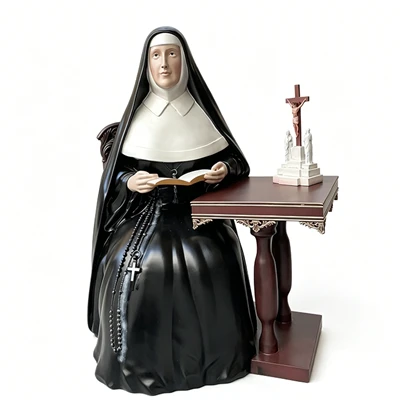
At Bronze Replicas Of Famous People, we’ve spent over a decade refining our process to deliver exactly that. We work with master sculptors, use the highest grade bronze alloys that will last for centuries, and work closely with every client (and when applicable, the person being depicted) to make sure the final piece is everything they imagined. Whether you’re looking for a small desk-sized piece of a famous scientist, a life-sized statue for a public park, or a custom work for a private collection, we’re here to help you navigate the difference between casts, replicas, and custom bronze works, so you can make a choice that honors the famous person you care about. If you’re ready to discuss your project, we’re ready to walk you through every detail, answer all your questions, and help you create a bronze piece that will last for generations.
References
Stainless Steel Landscape Sculpture Association of International Bronze Sculptors. (2021). Glossary of Bronze Sculpture Terms. Retrieved from professional industry publications on bronze casting and sculptural reproduction.
Smithsonian American Art Museum. (2019). Bronze Casting Processes in 19th and 20th Century American Sculpture.
L’Académie des Beaux-Arts. (2020). Authorized Reproduction and Limited Edition Bronze Sculpture Standards.
Huizhou Hexin Intelligent Manufacturing Industrial Co., Ltd.
Huizhou Hexin Intelligent Manufacturing Industrial Co., Ltd. is one of the most professional bronze replicas of famous people manufacturers and suppliers in China. Please feel free to buy the newest bronze replicas of famous people made in China here and get pricelist from our factory. All customized products are with high quality and competitive price.
Address: No.31, Second Industrial Zone, Nankeng Village, Xinxu Town, Huiyang District, Huizhou City, Guangdong Province, P.R.China
E-mail: zhangran@bronzehexin.com
WebSite: https://www.bronzehexin.com/
