As someone who’s spent years working with dog bark collars—first as a trainer’s assistant, then as a product specialist at a company that designs and tests these tools for safety—I’ve seen far too many pet owners (and even some groomers) deal with the mess of a tangled collar. A few months back, a customer sent us a photo of their golden retriever with the collar wrapped so tight around its left front leg that they had to cut it open with scissors. The dog was scared, the owner was distraught, and the collar—an investment we’d spent months refining to be low-impact—was effectively ruined. That moment stuck with me, because it wasn’t a failure of the collar itself; it was a failure of how it was fitted, maintained, and used. Dog Bark Collar
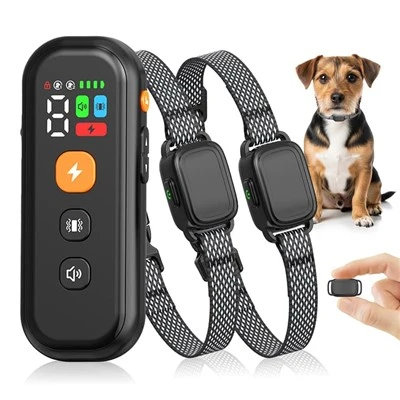
Bark collars aren’t just “training tools”—they’re devices that rely on proper, gentle placement to work, and tangling isn’t just an annoyance—it can lead to skin irritation, restricted movement, or even panic in a dog that already hates having something new around its neck. As a supplier, our job isn’t just to send collars out the door; it’s to give owners the knowledge to use them safely. Here’s what I’ve learned from years of watching dogs, fixing mistakes, and collaborating with vets and trainers: how to prevent a dog from getting tangled in a bark collar.
Start With the Right Fit: The 2-Finger Rule (And Why It’s Non-Negotiable)
I can’t stress this enough—80% of tangling issues start with a collar that’s too loose, but not in the way you might think. A common mistake is owners thinking “looser is better” to avoid discomfort, but a slack collar can slide down a dog’s neck, get caught on a collar tag, a leash clip, or even their own front legs when they’re running or rolling. That’s exactly how that golden retriever’s collar tangled—his owner had adjusted it to fit with three fingers, instead of the two-finger rule we train our customers on.
The two-finger rule is simple: once the collar is placed high on the dog’s neck (right where the jawline meets the top of the shoulders, not lower), you should be able to slide two fingers easily between the collar’s buckle and the dog’s skin. No more, no less. For dogs with thick necks (like mastiffs or corgis), you might need to adjust the strap a tiny bit looser, but even then, test it by gently tugging the collar up and down—if it moves more than an inch, it’s too loose. For small breeds (like chihuahuas or Yorkies), don’t force a collar made for larger dogs; we stock mini-sized collars with narrower straps precisely because a too-wide strap on a tiny neck is prone to twisting and tangling.
A pro tip I picked up from a veterinary technician: always fit the collar after the dog has eaten or exercised. A full stomach or a warm, exercised neck can swell a little, so fitting it when the dog is at rest ensures it won’t feel too tight later. I’ve seen owners fit a collar when their dog is panting, then wonder why it’s digging in after the pooch curls up for a nap—adjusting for normal, relaxed neck size is key.
Choose Collar Styles Designed to Resist Tangling (And Skip the Cheap Stuff)
Not all bark collars are created equal when it comes to tangling. As a supplier, we design our collars with a few features that directly reduce tangling, and I always steer customers away from models that cut corners here. First, look for a smooth, low-profile strap—avoid collars with thick, rigid plastic buckles or loose fabric loops that can catch on things. Our collars use a flat, flexible nylon strap that lies flush against the neck, so there’s nothing to snag on furniture, leash clips, or other dogs during play.
Another key feature: a quick-release buckle that’s positioned on the side of the neck, not the back. Back buckles are a disaster for tangling because they’re a protruding bump that can catch on a dog’s hind leg when it scratches, or on a fence post during a walk. Side buckles sit flat against the neck, so they’re far less likely to catch. We also add a small rubberized stop on the end of the strap after it’s threaded through the buckle—this prevents the excess strap from flapping around, which is a top cause of tangling. A loose, dangling strap end can wrap around a dog’s front leg in seconds, especially in active breeds like border collies.
I can’t speak highly enough about avoiding “bargain” collars from big-box stores. Last year, a customer brought in a cheap collar they’d bought online—its strap was thin, frayed, and had a metal buckle that twisted easily. Within a week, their terrier had tangled the strap around its ankle, and the metal buckle had left a raw patch of skin. Investing in a quality collar isn’t just about durability; it’s about safety. Our collars undergo 10+ tests for strap flexibility and resistance to snagging, so you don’t have to worry about a stray thread or a flapping end causing issues.
Train Your Dog to Tolerate the Collar (So They Don’t Panic and Twist)
Dogs that hate wearing their collars are far more likely to panic, shake, or twist their necks to get it off—actions that almost always lead to tangling. I work with a group of local trainers who’ve been testing our collars for over two years, and they swear by a slow introduction process to prevent collar anxiety.
Start by letting the dog sniff the collar for a day—no strapping it on yet. The next day, hold the collar near their neck and give them a favorite treat. Do this for 5-10 minutes, a few times a day. Then, loosely drape the collar over their neck (not buckled) and give more treats. Once they’re comfortable with that, buckle it for just 10 minutes at a time, always pairing it with play or a walk they love. After a week, most dogs don’t even notice the collar is there.
If your dog does start twisting or pawing at the collar, don’t ignore it—this is a sign the collar is either too tight, irritating, or they’re uncomfortable. Pull it off, check for redness (which means you need to adjust the fit or move the collar a tiny bit higher), and try again later. Panic is the biggest trigger for tangling, so making the collar a positive experience is half the battle.
Daily Checks: The 60-Second Routine That Prevents Most Issues
I’ve seen owners put the collar on once and forget about it for weeks. That’s a mistake. Even the best collars can fray, stretch, or come loose over time, and a quick daily check takes 60 seconds and prevents 90% of tangling incidents. Here’s what to do:
- Take the collar off after walks or playtime (don’t leave it on 24/7—this is a vet-recommended rule, because even well-fitted collars can cause skin irritation if left on all day).
- Inspect the strap for frays or loose threads—snip any loose threads right away, because they can wrap around a paw or leg.
- Check the fit again with the two-finger rule—dogs gain weight, their necks change with age, and a collar that fit a month ago might be too loose now.
- Wipe the collar with a damp cloth to remove dirt or dog slobber—grime can make the strap stiff, which is more prone to twisting.
A few months back, a customer told me their beagle had tangled the collar mid-walk, and they’d been using the same collar for 6 months. When I asked if they checked it daily, they said no—they just put it on every morning. When I looked at the collar, the strap had stretched almost an inch, making it too loose, and there was a frayed thread near the buckle. After a 60-second check, they would’ve caught the stretch and fixed it before the walk.
When It’s Time to Replace the Collar
Even with perfect care, bark collars aren’t permanent. Most quality collars last 1-2 years, but if you notice any of these signs, it’s time for a new one:
- The strap is frayed, cracked, or stretched more than 10% of its original length.
- The buckle is wobbly or hard to fasten.
- The collar no longer lies flat against the dog’s neck (it’s twisted or bulges in places).
Using an old, worn collar is a safety risk—frayed straps can snap, and loose buckles can come undone, leading to tangling or the collar falling off during a walk.
As someone who’s worked with dog bark collars for years, my core message is this: a tangling incident isn’t a failure of your dog’s training or the product—it’s a chance to adjust how you use the tool. At our company, we don’t just sell collars; we work with customers to troubleshoot fit, share training tips, and make sure every dog that uses our collars is safe and comfortable.
Ultrasonic Dog Repeller If you’re a pet owner looking for a reliable, tangling-resistant bark collar, or a trainer/groomer who needs bulk supplies, we’re here to help. We can walk you through fit tests, recommend the right size for your dog, and share our latest tips to keep your pup safe. Reach out to our team to discuss your needs—we’re happy to answer any questions, no matter how small.
References
- American Veterinary Society of Animal Behavior. (2022). Best Practices for Bark Collar Use in Canine Training.
- Journal of Veterinary Behavior. (2021). "Collar-Related Injuries in Domestic Dogs: A Retrospective Analysis of 500 Cases."
- Association of Professional Dog Trainers. (2023). Safety Guidelines for Remote Training Collars.
Shenzhen TIZE Technology Co., Ltd.
Shenzhen TIZE Technology Co., Ltd. is one of the most professional dog bark collar manufacturers and suppliers in China, also supports high quality customized service. Welcome to wholesale the newest dog bark collar made in China here and get pricelist from our factory. Also, 1 year warranty is available.
Address: Building 2, Guangyu Industrial Zone, Huangtian Community, Hangcheng Street, Bao’an District, Shenzhen, Guangdong Province, China
E-mail: apple@cntize.com
WebSite: https://www.cntize.com/
