If you’ve ever shopped around for cables—whether for industrial machinery, robotics, EV charging, or even just a high-use home AV setup—you’ve probably seen the terms “flexible cable” and “multistrand cable” thrown around. At first glance, they might sound like the same thing, and it’s easy to mix them up. But here’s the thing: as a flexible cable supplier who’s walked clients through this exact confusion a hundred times, the difference isn’t just technical—it’s a matter of performance, lifespan, and cost that can make or break a project. Flexible Cable
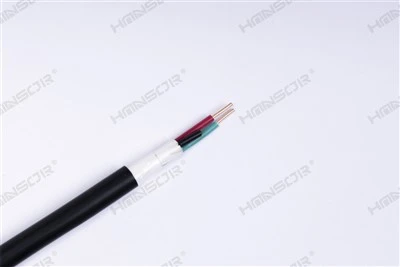
Let’s start with the basics, but skip the stuffy textbook jargon you’ll find in old datasheets. Most people know cables are made of conductors, right? That’s the part electricity flows through. The oldest, simplest conductor design is solid: one single thick metal wire, usually copper, encased in insulation. Solid cables work fine for things that don’t move much—like house wiring inside walls, where they sit still and only have to carry a steady load. But if you need a cable that bends, twists, or moves repeatedly, solid’s a non-starter. That’s where multistrand cable comes in.
Multistrand cable is, as the name suggests, a bunch of thin solid wires twisted together into one bundle. Back in the day, multistrand was the go-to for any application that required even a little flexibility—like extension cords that get dragged around worksites, or wiring for old factory conveyor belts. The idea makes sense: thin wires bend easier than thick ones, so a bundle of thin wires should be more flexible than a single thick one. But here’s the catch: multistrand’s flexibility only goes so far. Twist those thin wires together, and each one still has a fixed diameter. Bend the cable too many times, or bend it too sharply, and individual strands start to fatigue—they break, one by one, until the whole conductor fails. For low-cycle uses—like a cord you plug and unplug once a day, or a conveyor belt that moves a few feet back and forth a dozen times an hour—multistrand works. But push it beyond that, and it’s not just a minor inconvenience; it’s a costly downtime event waiting to happen. That’s where flexible cable comes in.
Flexible cable takes the multistrand concept and cranks it up to 11. The key difference is in how the conductor strands are constructed. Instead of a small number of relatively thick strands twisted together, flexible cable uses thousands of ultra-thin, micro-sized strands bundled together. We’re talking strands so thin you could see why a human hair is thicker than each one. And it’s not just random twisting—flexible cable conductors are built in layers: first, tiny strands are twisted into small sub-groups, those sub-groups are twisted into larger strands, and so on, until you end up with a single conductor that’s way more pliable than even the most flexible multistrand cable on the market.
But flexibility isn’t the only advantage. Let’s talk about durability, because that’s the big one for most of our clients. If a multistrand cable lasts, say, 10,000 bending cycles before it starts to degrade, a flexible cable of the same conductor size and material can last 100,000, 500,000, or even a million cycles—depending on the grade. That’s a massive difference for applications that require constant movement: robotic arms that swing 24/7, automated assembly lines that move parts nonstop, industrial robots on car factory lines, or even charging cables for electric vehicles that are plugged in and unplugged hundreds of times a week. I once had a client who was using multistrand cables for their robotic welding cells; they were replacing them every 3 months because of broken strands. Switched to flexible cable, and those same cells have run for 2 years without a single cable failure. The cost savings? They told us it paid for the new cables in less than a month, between no more emergency downtime and fewer service calls.
Don’t get me wrong—multistrand cable isn’t obsolete. For low-stakes, low-flex applications, it’s still a great, cost-effective option. It’s cheaper to manufacture, easier to terminate for simple jobs, and works perfectly when the cable won’t see much movement. But here’s where most people go wrong: they see a cable labeled “multistrand” and assume it’s flexible, so they use it for a high-movement job, and then they’re frustrated when it breaks. I’ve had countless new clients come to us with horror stories: they bought a “flexible” cable that was actually just cheap multistrand, and it failed way faster than expected. That’s the mistake—confusing the two isn’t just a technicality; it’s a shortcut that costs more in the long run.
Another key difference is how they handle environmental stress. Flexible cables are often built with extra layers of insulation and jacket material that’s designed to resist abrasion, oil, chemicals, extreme temperatures, and even UV light. Multistrand cables usually have basic insulation, meant for indoor use only. If you’re running a cable outside, or near heavy machinery that spits out oil, flexible cable is the way to go. I had a client in the logging industry who needed cables for their portable sawmill setup. They tried multistrand cables once, and they were chewed up by sawdust, oil, and constant bending in 2 weeks. Switched to our outdoor-rated flexible cables, and those are still going strong 18 months later.
Now, let’s talk about weight, too. Flexible cables, even though they have way more strands, are actually lighter than equivalent multistrand cables. That’s a huge plus for applications like robot arms, where extra weight can slow down movement, increase energy use, and put more strain on motors. A 10mm2 flexible cable is not only more bendable than a 10mm2 multistrand cable, it’s also 15-20% lighter. That adds up over dozens of cables on a single robot arm, reducing wear on bearings and cutting down on energy costs over time.
Wait, but what about cost? I know that’s a big question. Flexible cables are more expensive upfront than multistrand cables. No way around that—those tiny strands take more time and material to manufacture, and the extra jacket layers add cost. But here’s the thing: you have to look at total cost of ownership, not just the initial price. If a flexible cable lasts 50 times longer than a multistrand cable, you’re not replacing it every few months—you’re replacing it every few years. For a small project, the difference might be negligible, but for a factory with 100 robotic arms, that’s 100 cables each costing twice as much upfront, but you’re only buying 1 every 5 years instead of 10 a year. That’s a no-brainer for most operations.
I also get asked a lot: can flexible cable be used as a replacement for multistrand? Absolutely, and we see that all the time. It’s more flexible, more durable, lighter, and better for harsh environments. But multistrand can’t be a replacement for flexible cable if you need consistent movement. It’s a one-way street.
Let’s wrap this up with a quick cheat sheet, so you don’t mix them up next time you’re shopping:
- Solid: No flexibility, for static use only.
- Multistrand: Moderate flexibility, good for occasional low-movement jobs, cheap upfront, high maintenance long-term.
- Flexible: High flexibility, thousands of tiny strands, durable for constant movement and harsh environments, lower long-term cost, higher upfront price.
At the end of the day, the choice boils down to how your cable is going to be used. If it’s sitting still in a wall, go multistrand. If it’s moving every minute, twisting around machinery, or exposed to harsh conditions, flexible cable is worth every penny.

If you’re not sure which one you need for your specific project—whether it’s robotics, EV charging, industrial automation, outdoor power, or something else entirely—hit me up. I’ve worked with thousands of clients across different industries, and I can help you pick the right cable that fits your needs and budget, no guesswork required.
Flexible Cable References:
- Underwriters Laboratories. (2021). Standard for Flexible Cords and Cables. UL 62.
- International Electrotechnical Commission. (2020). IEC 60228: Conductors of insulated cables.
- The Copper Development Association. (2022). Flexible vs. Multistrand Cables: Performance and Application Guide.
- Industrial Electrical Manufacturers Association. (2021). Cable Selection for Dynamic Applications. IEA Tech Brief 12-21.
Jiangsu Hansheng Cable Technology Co., Ltd.
With abundant experience, we are one of the most reliable flexible cable manufacturers and suppliers in China. We warmly welcome you to buy bulk customized flexible cable from our factory. If you have any enquiry about quotation and free sample, please feel free to email us.
Address: No. 18, Qingfeng Road, Touqiao Town, Guangling District, Yangzhou City, Jiangsu Province
E-mail: jshansor888@gmail.com
WebSite: https://www.hansorcable.com/
