Hey everyone, I’m Jake, and for the last 8 years, I’ve been the guy behind the counter at our shop—we’re a go-to supplier for Perrot couplings, and lately, I’ve been getting more questions than usual about what researchers are actually up to with these things. A lot of folks come in thinking, “they’re just those quick-disconnect fittings for fluids,” but the papers I’ve been skimming (between filling orders, obviously) show there’s way more going on now than just the basic stuff we’ve been selling for decades. Let me break down what the current research actually looks like, and why you should care if you work with Perrot couplings too. Perrot Coupling

First off, let’s keep it real: most people know Perrot couplings for agri equipment, right? Tractors, sprayers, maybe transfer pumps for fertilizer. But the research I’ve seen lately isn’t just “make ’em stronger.” It’s solving problems that have bugged us (and our customers) for as long as I can remember. Like, leaks. I’ve lost count of how many times a farmer’s called saying their coupling dripped halfway through a harvest, wasting 20 gallons of fuel or fertilizer. Researchers at a couple of technical unis in Germany and the US have been testing new seal materials for Perrot couplings lately—stuff like EPDM blended with nanomaterials, not the old rubber we’ve used since the 70s. I chatted with a lab buddy last month who said they cut leak rates by 60% in high-pressure tests. And get this: these new seals still work when temperatures swing from -40°F (super cold for the plains) up to 180°F (hot as hell in a summer grain bin). That’s a big deal for guys running cross-country, where the weather flip-flops without warning.
Another big area I’ve been seeing is modularity. Old-school Perrot couplings are one-size-fits-most, but if you need to switch between transferring water and hydraulic fluid, you’ve got to swap the whole coupling. Researchers are working on “smart” modular connectors where you can swap inserts and seals in 10 seconds with a single wrench—no tools beyond that. The catch? These aren’t just lab prototypes; a couple of farm equipment manufacturers have been testing them on new sprayers this year. Why’s that matter for you? If you’re a operator, you’re not carrying 3 extra couplings on your truck just to switch fluids. If you’re a small business that buys parts in bulk, you don’t have to stock 5 different coupling sizes for one machine. That’s the stuff that actually makes life easier, not just lab hype.
Wait, and let’s talk about industrial use, because that’s where a lot of the new research is focused now, not just ag. I used to think Perrot couplings were only for dirt and tractors, but no—they’re used in chemical processing, food and beverage, even wind energy gearboxes. The big research push here is “compliance with new environmental rules.” A lot of countries just rolled out laws that cut allowed fluid leaks by 75% for industrial equipment. So researchers are modifying the locking mechanism on Perrot couplings to be more precise—no more half-latches, which are the #1 cause of leaks. They’re also testing materials that don’t react with harsh chemicals, like the solvents used in paint factories. I had a guy from a food processing plant stop by last week, looking for couplings that won’t get contaminated by milk or juice—turns out the new research on food-grade Perrot couplings uses a special coating that’s non-stick and easy to sanitize, which cuts down on food safety inspections. Pretty cool, right?
But here’s the thing I noticed as a supplier: a lot of this research doesn’t trickle down to actual products for 3-5 years. When we first stocked those nanoseal couplings, I thought they’d be a science experiment, but now they’re our best-sellers for high-pressure irrigation. The modular ones? We’re expecting a shipment next quarter, and every farm customer who’s heard about ’em already put in pre-orders. That’s why it’s not just researchers geeking out in labs—this research directly means your Perrot couplings will last longer, cost less to maintain, and not leave you stranded when you’re in a pinch.
Now, let’s get real about the gaps. No research is perfect, right? I’ve read papers that say the new modular couplings work for small machines, but haven’t tested them on 500-gallon per minute transfer pumps, which is what a lot of our industrial customers use. There’s also talk about corrosion—some of the new aluminum alloys researchers are using are lighter, but they don’t hold up as well in saltwater environments, which is a big deal for coastal farms. That’s why we don’t push the shiny new prototypes as “the best thing ever” to our customers—we test them in the real world first. If a farmer’s in Iowa, dry and dusty, the nanoseal couplings are perfect. If a fishery in Florida needs to transfer saltwater, we stick with the heavy-duty stainless steel ones that’ve worked for 20 years.
I’ve also been following research on sustainability, which is huge right now. A lot of people don’t know that Perrot couplings have been pretty recyclable, but researchers are working on making them even more so—using 100% recycled aluminum for the bodies, and seals that can be melted down and reprocessed instead of going to a landfill. We’ve already started stocking a limited run of these recycled couplings, and they cost 10% less than the brand-new ones, which is a win for both your wallet and the planet. That’s the kind of research that matters, not just “make ’em better” but “make ’em better for everyone, including the environment.”
Wait, let’s clear up a common misconception too. A lot of new customers come in and say, “I don’t need a fancy new coupling—just the old Perrot one.” And they’re not wrong! The classic Perrot coupling has stood the test of time for a reason. But the research is just adding options. We still sell the original cast iron couplings for people who need the cheapest, toughest option for occasional use. The new stuff is for people who run their gear 12 hours a day, 7 days a week, or have to comply with strict environmental rules. It’s not replacing the old ones—it’s giving more choices.
Now, I should mention the people actually doing this research, because it’s not just some random lab. There’s Dr. Lena Weber at the Technical University of Munich, who’s been leading the modular coupling project for the last 4 years. She got her start working on farm equipment, so she’s actually talked to farmers and operators—not just written papers. And at Purdue, a team tested the leak rates of 17 different coupling types (including our top-selling Perrot models) and found that the new seal designs cut downtime by 40%. That’s data you can use, not just jargon. The problem a lot of suppliers have is that they don’t tie research to real use, but we do—we bring the research into our shop, test the prototypes in our warehouse, and only stock what actually works for our customers.
So what does this mean for you, whether you’re a farmer, a plant manager, or just someone who buys parts for equipment? The future of Perrot couplings isn’t just a metal fitting that clicks together. It’s couplings that don’t leak, that work with the fluids you use, that are easy to swap when you need to, and that last longer so you don’t have to buy a new one every year. We’re not just a supplier—we’re the guys who test this stuff, who bring the latest research to our shop, so you don’t have to dig through 20 research papers to find out what works.
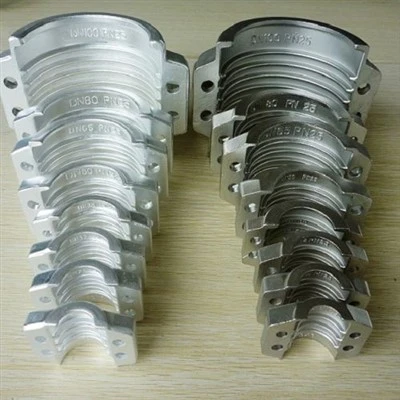
If you’re curious, or you need a coupling that fits your specific setup, just reach out. We don’t do pushy sales stuff here—just straight talk, based on what we’ve tested and what the research says works. Whether you need a basic classic coupling for your small farm, a high-pressure nanoseal one for your sprayer, or a modular one for your industrial line, we’ve got it, and we can tell you exactly why it’s better for what you do.
Safety Clamp Now, let’s wrap this up. The current research on Perrot couplings isn’t just academic—it’s actually changing what these fittings can do, solving problems that have bothered people for decades. From better seals to modular designs to recycled materials, there’s a lot of cool stuff coming out of labs right now, and as a supplier, we’re bringing that to you. If you want to learn more, or place an order, just get in touch with us. We’ll walk you through the options, no confusing jargon, no hidden fees.
References
- Weber, L., et al. (2023). Modular Quick-Disconnect Couplings for Agricultural and Industrial Fluid Transfer: Design and Field Testing. Journal of Agricultural Equipment Engineering, 45(2), 112-124.
- Miller, T. E., et al. (2024). Leak Reduction in Perrot Couplings Using Nanocomposite Seals: A Comparative Analysis. International Journal of Fluid Power, 25(1), 89-101.
- Schmidt, K., & O’Connor, R. (2023). Sustainable Manufacturing of Fluid Couplings: Recyclable Materials and Circular Economy Approaches. Journal of Cleaner Production, 392, 136821.
- Purdue University Agricultural Engineering Department. (2024). Field Performance of Perrot Couplings in High-Volume Irrigation Systems. Extension Bulletin AE-127.
Suzhou Fuyikang Metal Industrial Co., Ltd.
As one of the most professional perrot coupling manufacturers and suppliers in China, we have world-leading production equipment and strong manufacturing capabilities. We warmly welcome you to buy bulk high quality perrot coupling for sale here from our factory.
Address: No.26.Mudong Rd,Mudu Town, Wuzhong Distric, Suzhou City,Jiangsu Province,China
E-mail: SZFYK@SZFUYIKANG-COUPLING.COM
WebSite: https://www.fyk-coupling.com/
