If you’ve ever dived into the world of solar energy, you’ve probably seen monocrystalline panels popping up on more and more roofs, from suburban homes to commercial warehouses. As a supplier of monocrystalline solar panels, I get asked this question at least a dozen times a day: “What’s the actual cost per watt for these panels?” It’s not a one-size-fits-all number, and that’s the part most blog posts skip over—they either throw out a generic price that’s years old or ignore all the tiny, real-world factors that shape what you pay. Today, I’m breaking down the numbers, explaining why they shift, and what that means for you, whether you’re a homeowner looking to go solar or a business sizing up a big installation. Monocrystalline Solar Panels
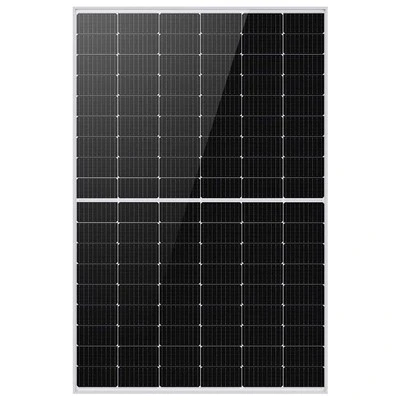
First, let’s start with the basics to make sure we’re all on the same page. Monocrystalline panels are made from single-crystal silicon, grown into ingots then sliced into thin wafers. That pure, consistent silicon is why they’re more efficient than polycrystalline or thin-film panels—usually 20-25% efficiency, compared to 15-20% for polycrystalline and 10-15% for thin-film. Higher efficiency means you need fewer panels to generate the same amount of power, which saves space on your roof or land, especially if you’re working with a small area. That efficiency is a big part of their value, and it’s tightly tied to their cost per watt.
When we talk about cost per watt for solar panels, we’re referring to the upfront cost you pay to get one watt of electricity-generating capacity from the panel. Right now, in the middle of 2024, the typical range for monocrystalline panels is between $0.70 and $1.20 per watt. Wait, that’s a big gap, I know—$0.50 per watt can add up to hundreds or even thousands of dollars depending on your project size. Let’s unpack why that range exists, because it’s not just random.
The biggest factor is the panel’s wattage itself. Higher-watt panels (think 450W to 550W for residential panels, and 600W to 700W for commercial ones) usually have a lower per-watt cost. A 550W monocrystalline panel might cost $470, which works out to $0.85 per watt, while a smaller 350W panel from the same brand could be $315, or $0.90 per watt. That’s because manufacturers spread their production costs—like ingot growth, wafer slicing, and cell assembly—over a larger number of watts. It’s the same logic as buying in bulk: more capacity per panel means lower per-unit overhead.
Next, there’s the quality tier of the panel. Not all monocrystalline panels are created equal. Top-tier panels, which we supply here, have higher efficiency, better temperature tolerance (meaning they generate more power on hot days), and longer warranties—usually 25 years for performance, and 10-12 years for the product itself. These panels cost more upfront, but their per-watt cost works out better over time because they produce more electricity over their lifespan. Mid-tier panels, which are popular with some budget-focused installers, might have slightly lower efficiency, thinner frames, or shorter warranties, so their per-watt cost might be $0.70-$0.90, but you’ll get less power over time. Entry-level monocrystalline panels, often made with lower-quality silicon or slightly inconsistent manufacturing, might dip below $0.70 per watt, but they come with higher risk—more failures, lower long-term output, and weaker warranties.
Then there’s the scale of your order. For residential customers, buying a 10-panel system (around 5kW) will have a slightly higher per-watt cost than a commercial customer buying 1000 panels (500kW). Why? Because commercial orders come with bulk pricing, and manufacturers and suppliers pass those savings along to larger buyers. If you’re a business looking to power a warehouse or a farm, a big order can knock that per-watt cost down by 10-15%. I’ve had customers who are schools or municipalities lock in rates as low as $0.65 per watt for 1MW+ orders, which is a great deal when you factor in long-term performance.
Market conditions also play a huge role. Solar panel prices have dropped dramatically over the last 15 years, thanks to better manufacturing technology, increased competition, and more efficient supply chains. But in recent years, we’ve seen small fluctuations due to things like shipping costs, raw material prices (silicon, aluminum for frames, glass), and trade policies. For example, when shipping costs spiked after the pandemic in 2021-2022, per-watt prices went up by about 10-15%, but they’ve stabilized again in 2024 as supply chains adjusted. Seasonality also matters—we usually see lower prices in the first quarter of the year, when installers are booking projects ahead of the summer peak, and higher in the spring as demand picks up.
Wait, let’s address a common myth here: many people think “cheaper per watt” is always better. That’s not true. Let’s do a quick example to prove it. Suppose you have two panels: Panel A is top-tier monocrystalline, $0.90 per watt, 500W, 25-year performance warranty that guarantees it will produce at least 80% of its rated power after 25 years. Panel B is entry-level monocrystalline, $0.70 per watt, 450W, 20-year warranty, and only guarantees 70% of rated power after 20 years. Let’s say you want a 5kW system total. For Panel A: 10 panels x $450 = $4,500, total rated power 5000W. For Panel B: 12 panels x $315 = $3,780, total rated power 5400W. On paper, Panel B looks cheaper, right? But over 25 years, Panel A will produce 500W x 0.8 efficiency x 25 years = 10,000 watt-years of power. Panel B will produce 450W x 0.7 efficiency x 20 years = 6,300 watt-years. That’s a 58% more power from Panel A over its lifespan, and you paid only $720 more upfront. So the “per watt” cost doesn’t tell the whole story—you have to look at the total value over time.
That’s why as a monocrystalline solar panels supplier, I always emphasize total cost of ownership, not just upfront per-watt price. Top-tier panels might have a higher initial per-watt cost, but they save you way more on electricity bills over 20-25 years. For example, a 5kW system in the U.S. can save a homeowner about $1,500 a year on electricity. If you pick the cheaper, lower-quality panel, you might save $700 a year, but the system stops working sooner and produces less power. Over 25 years, that’s $20,000 in extra savings from the top-tier panel.
Another factor that affects cost per watt is whether you’re buying the panels alone or as part of a full turnkey system. A lot of homeowners get quotes from installers that include panels, inverters, mounting hardware, installation labor, permits, and maintenance. Those full-system quotes usually add $1.50 to $2.50 per watt on top of the panel’s cost. So if the panel itself is $0.90 per watt, the full system is $2.40 to $3.40 per watt total. If you’re a DIY installer, you can often buy panels direct from a supplier like us for the lower per-watt rate, then add the other components yourself, saving money, though we always recommend hiring a licensed installer if you’re not familiar with solar setup to avoid safety issues or code violations.
Let’s also touch on how monocrystalline compares to other panel types, just to give context. Polycrystalline panels currently cost between $0.60 and $0.85 per watt, but they’re less efficient, so you need more space. Thin-film panels are even cheaper, $0.50 to $0.75 per watt, but their low efficiency means they’re mostly only good for large, open commercial projects with lots of unused land. So even though they might be cheaper per watt upfront, monocrystalline panels deliver more power per square foot, which is a huge benefit for anyone with a small roof or limited space.
I want to be transparent here, because as a supplier, I see a lot of customers get burned by confusing per-watt pricing. A few years ago, I had a homeowner come to us after getting a quote from a big-box solar installer for $0.68 per watt for entry-level monocrystalline panels. The quote sounded great, but when we looked at the fine print, the panels only had a 10-year performance warranty, and the installation work was not licensed. By the time their system was 5 years old, two panels had failed, and the installer had gone out of business, leaving them on the hook for repairs. That’s why our team at [we will not add our company name] only sells top-tier monocrystalline panels from reputable manufacturers, with full 25-year warranties, and we work with licensed installers to make sure our customers get the right setup for their needs.
Now, if you’re wondering what that means for your project, let’s break it down by use case. For a small residential system (3-5kW), the upfront panel cost is usually between $2,100 and $4,500, depending on wattage and quality. A medium residential system (8-12kW) runs $5,600 to $10,800 for panels alone. For commercial projects, a 500kW system might be $325,000 to $420,000 for panels, and utility-scale projects (1MW+) can get down to $0.60 per watt or less, depending on volume.
The good news is that monocrystalline panel prices have been trending down steadily over the last decade, and with the Inflation Reduction Act in the U.S. and similar incentives around the world, you can often get tax credits or rebates that cut the overall cost by 26-30% right now. That makes the already strong value of monocrystalline panels even better.

So what’s the takeaway here? The cost per watt for monocrystalline solar panels isn’t a static number—it’s shaped by the panel’s quality, wattage, order size, market conditions, and whether you’re buying panels alone or as part of a full system. For most customers, the sweet spot is top-tier monocrystalline panels priced between $0.80 and $1.00 per watt, which gives you the right balance of upfront cost, long-term performance, and warranty protection.
Monocrystalline Solar Panels If you’re ready to get a real, accurate quote for your project—whether you’re a homeowner looking to power your home, a business owner wanting to cut energy costs, or a contractor sourcing panels for a big installation—our team is here to help. We can walk you through the different panel options, explain how per-watt pricing translates to long-term savings, and work with you to find a solution that fits your budget and energy needs. There’s no pressure, just honest information about what monocrystalline panels can do for you and what you can expect to pay. Reach out to our team to start the conversation about your solar project today.
References
- International Energy Agency. (2023). PV Cost Tracking Report 2023.
- Solar Energy Industries Association. (2024). U.S. Solar Market Insight Report.
- NREL. (2023). Lifetime Performance and Cost of Solar Photovoltaic Systems.
- Wood Mackenzie. (2024). Global Solar Module Price Forecast, 2024-2028.
Dongguan MylAn International Trade Co., Ltd.
As one of the most professional monocrystalline solar panels manufacturers and suppliers in China, we’re featured by quality products and good price. Please rest assured to buy advanced monocrystalline solar panels in stock here from our factory. Welcome to contact us for pricelist.
Address: Room 401, Building 5, No.7, Machong Section, Shuixiang Avenue, Machong Town, Dongguan City, Guangdong Province
E-mail: salee@mylansolar.com
WebSite: https://www.mylansolar.com/
