If you’ve ever stood on a concrete job site watching sand and gravel get sorted into precise sizes, or peeked into a grain processing plant where corn and chaff part ways like magic, you’ve seen a multi deck vibrating screen at work. As someone who’s spent the last 12 years supplying these machines to quarries, grain processors, recycling facilities, and even mining operations, I can tell you this isn’t some random trick—this is precision engineering in action, designed to turn messy, mixed raw material into uniform, usable products. I’ve had customers tell me they thought these screens were just “shakers with more levels” when they first reached out, so today I want to pull back the curtain on how they actually separate materials, and why our multi deck models are built to get the job done better than any single-deck unit out there. Multi Deck Vibrating Screen

Let’s start with the basics: what a multi deck vibrating screen is, and why you’d use one over a single-deck. A single-deck screen does one thing—sorts material into two fractions, one smaller than the mesh on its single deck, one larger. A multi deck model stacks two, three, even four decks on top of each other, each with its own sized mesh, so it can split raw feed into three, four, or five distinct fractions all in one pass. That’s a game-changer for facilities that process thousands of tons of material a day because it cuts down on equipment footprint, reduces energy use, and speeds up the entire process. But to get that consistent, accurate separation, every part of the machine has to work in sync, from the vibrating motor that drives it to the mesh panels that do the actual sorting.
First, let’s break down how the feed enters the screen. If you pour a load of mixed material—say, crushed rock ranging from fine dust to 2-inch chunks—directly onto the top deck, it’ll clump up, and the larger chunks will just sit on top, blocking the smaller ones from fitting through the mesh. That’s why the feed end of our multi deck screens has a carefully designed feed distribution chute, built to spread the material evenly across the entire width of the top deck, not just in a small pile in the center. I’ve seen facilities skip this step and end up with lopsided decks that wear out faster and produce inconsistent sizes—so this isn’t an afterthought, it’s a core part of how separation works. The chute also slows the feed just enough to keep the material from bouncing too much before it hits the first deck, so it settles into a steady, uniform layer.
Once the material is evenly spread, the vibrating motion kicks in, and this is where the magic really happens. Most people assume vibrating screens shake back and forth, but our units use a circular or elliptical vibration, generated by heavy-duty, calibrated eccentric motors mounted on the side of the screen frame. The vibration frequency and amplitude (the distance the screen moves) aren’t random—they’re matched to the material you’re processing. For example, dry sand needs a higher frequency (around 1,500 RPM) and smaller amplitude, so the fine particles bounce just enough to fall through the mesh without floating away. For larger, denser material like crushed rock, we use a lower frequency (around 900 RPM) and larger amplitude, so the heavier chunks tumble and work their way through the layer without getting stuck. This circular motion is key because it prevents blinding—when small plastic or rock particles clog the mesh holes—something single-deck units often struggle with because they use a less effective linear vibration.
Now, let’s get to the decks themselves, the heart of the separation process. Each deck in a multi stack has a specific mesh size, sized in order from largest at the top to smallest at the bottom. The top deck is the “first cut” for the largest oversize material—think 1.5 to 2-inch rock. Any particle larger than that mesh size can’t pass through, so it travels across the deck and drops off into an oversize chute, ready for further processing or disposal. Particles smaller than that top mesh fall right through onto the middle deck, which has a smaller mesh size—say 0.5 inches. Now, only particles between 0.5 inches and 1.5 inches are left on the middle deck, while anything under 0.5 inches falls through to the bottom deck. The bottom deck has the smallest mesh, separating the fine material—dust, sand, or small grains—from the 0.5-inch fraction. The result? Three or four distinct products, all separated in a single pass, no extra equipment needed.
But separation isn’t just about mesh size and vibration. There’s a lot going on to make sure particles actually reach the mesh holes. The material layer on each deck needs to be thin enough, right at around 1 to 2 times the mesh opening size, so particles can move around and find their way through. That’s another benefit of the even feed distribution chute we build—if the layer is too thick, small particles get trapped under larger ones and can’t reach the mesh. I once worked with a gravel quarry that tried to run a feed distribution chute they built themselves, and their layer thickness was three times the mesh size, so they were losing 15% of fine sand because it couldn’t get through. We swapped in our custom chute, and that loss dropped to less than 2% within a week.
We also design our decks with a slight incline, usually between 15 and 20 degrees from horizontal. That slope, combined with the vibration, makes the material move slowly down the length of the deck at a controlled speed—about 5 to 15 feet per minute, depending on the material. If the speed is too fast, particles don’t have enough time to work their way through the mesh. If it’s too slow, material builds up and clogs the deck. We calibrate that slope based on the feed rate and mesh size, and many of our multi deck screens have adjustable feet so operators can tweak it on the fly as their feed changes. For sticky material, like wet clay or grain with high moisture content, we can even add deck liners that reduce friction, or ultrasonic mesh cleaners that vibrate at a higher frequency to dislodge stuck particles before they can clog the holes. That’s a feature I didn’t see on most competitor models when I first started in this industry, and it’s become a staple because it cuts downtime by hours every week for customers processing damp materials.
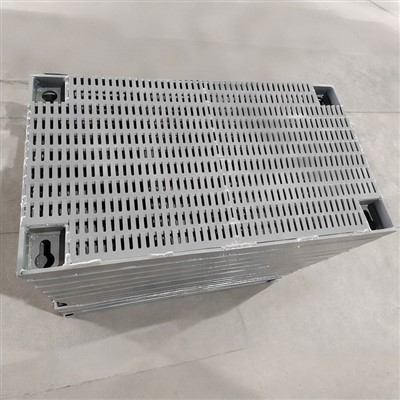
Another common question I get: what about materials that are the same size as the mesh opening? Those are called “mid-sized” particles, and they can mess up separation if the deck isn’t designed right. If a particle is exactly the same size as the mesh, it might get wedged in the hole, instead of passing through. Our mesh panels are made from high-tensile steel or polyurethane, depending on the material, with rounded edges on the mesh openings. That prevents particles from getting wedged, and also reduces wear on the mesh itself. We also space the mesh openings evenly across the deck, so there are no dense areas where mid-sized particles pile up. For example, when separating corn for animal feed, mid-sized kernels that get wedged in the mesh can contaminate the fine fraction, but our rounded mesh edges eliminate that problem, so every product meets the exact size specifications our customers need.
Let’s talk about a real-world example, because this stuff is easy to get technical with, but seeing it in action makes it click. Last year, we installed a three-deck vibrating screen at a recycling facility processing construction and demolition debris. Their old single-deck system sorted wood, metal, and concrete into two fractions, but they were producing low-quality concrete aggregate that had too much fine dust and too many small wood chips. They needed three sizes: oversize material (wood and large metal) that gets sent to a landfill or recycling, medium concrete chunks, and fine sand for road base. We installed our three-deck model, with top deck mesh at 2 inches, middle at 0.5 inches, and bottom at 0.125 inches. The feed came in at 200 tons per hour, and the screen spread it evenly, vibrated at a calibrated frequency, and sorted it in one pass. Within the first week, their concrete aggregate quality improved by 22%, they reduced labor costs by one part-time operator, and their overall processing time for a load of debris dropped by 40%. That’s the impact a well-designed multi deck screen can have—It’s not just separation, it’s boosting profitability.
I should also mention that multi deck screens aren’t one-size-fits-all, which is why we work closely with every customer to customize the screen for their specific application. A screen that works for granite rock won’t work for wheat grain, just like a screen for plastic recycling won’t work for iron ore. We adjust the vibration frequency, amplitude, mesh type, deck slope, and even feed chute design to match the material’s density, moisture content, particle shape, and required output size. For example, grain is lighter and more brittle than rock, so we use a lower amplitude vibration to avoid breaking kernels, while still keeping the mesh clear. For dense iron ore, we use a higher amplitude to move the heavy chunks along the deck without settling too much. That customization is why our customers come back year after year—they don’t just get a screen that works, they get a screen that works for their unique operation.
Over the years, I’ve seen a lot of old ideas about how vibrating screens work, and I’ve corrected plenty of myths. One big one is that more decks mean better separation, but that’s not true if the design is bad. A poorly engineered four-deck screen might have inconsistent feed, bad vibration, and worn-out mesh that produces worse results than a high-quality two-deck unit. That’s why we test every model in our own lab before sending it to a customer, running materials of all types and sizes to make sure the separation is accurate, and the machine is durable enough to run 12, 16, even 24 hours a day in heavy industrial settings. The frame of our multi deck screens is made from thick, stress-relieved steel, so it can handle the heavy vibration and thousands of tons of material moving across it without warping or breaking. That durability is just as important as the separation function—if the machine breaks down, it costs our customers money, so we build them to last.
At the end of the day, the core of how a multi deck vibrating screen separates materials comes down to four key parts: even feed distribution, calibrated vibration that moves material at the right speed and force, precisely sized mesh panels, and thoughtful design that prevents blinding, clogging, and contamination. Every part works together to turn a messy, mixed feed into uniform, sellable products. For businesses that rely on consistent, high-quality output, that’s not just a nice feature—it’s the backbone of their operations.
If you’re tired of inconsistent separation, high downtime, or a system that takes up too much space in your facility, we can help. We’ve installed multi deck vibrating screens across industries, from quarries and mining to agriculture and recycling, and we work with you to design a system that fits your exact needs. Whether you need a two-deck screen for simple sorting or a four-deck model for complex fractions, we’ll guide you through the process, from selecting the right mesh and vibration settings to post-installation support. To learn more about how our multi deck vibrating screens can improve your material separation process and boost your bottom line, reach out to us today to discuss your specific requirements.
Spare Parts References:
- ASTM International. Standard Test Method for Sieve Analysis of Fine and Coarse Aggregates.
- Taggart, A.F. Handbook of Mineral Dressing. John Wiley & Sons, 1945.
- Svarovsky, L. Solid-Liquid Separation. Butterworth-Heinemann, 2000.
- American Society of Agricultural and Biological Engineers. Standard Sieve Sizes for Grain and Seed.
Xinxiang Fengda Machinery Co., Ltd.
Address: No.16 Wangguanying Village, Kangcun Town, Huojia County, Xinxiang City, Henan Province, China
E-mail: xxfdjx@163.com
WebSite: https://www.flipflowscreen.com/
