If you’ve ever had to lift something heavy—like a stuck trailer, a small construction beam, or even a piece of industrial machinery—you know how tempting it is to grab the first lifting tool you can find. But as a screw jack supplier who’s worked with all kinds of industries (from manufacturing to automotive to even stage rigging), I’ve seen way too many people waste time, money, and energy on tools that just don’t measure up. Let’s cut through the noise: screw jacks aren’t just a “me too” lifting device—they solve problems that other tools can’t, and here’s why that matters for anyone who regularly needs controlled, reliable lifting. Screw Jack

First off, let’s talk about precision. I’ve seen a lot of folks use hydraulic jacks or come-alongs for tasks that need to lift something exactly a certain height—like aligning two machine parts for a repair or adjusting a large piece of equipment to sit level on uneven ground. Hydraulic jacks are great for brute force, but they’re often hard to micro-adjust. Pump it a little too much, and you’ve lifted 2 inches instead of the ½ inch you needed; release the valve too fast, and the load drops abruptly. Screw jacks? They give you total control. Because the lifting mechanism relies on a threaded screw and a mating nut, you can turn the screw incrementally—sometimes even with your hands, if the load’s light, or with a power drill adapter for heavier stuff. Last month, a client who makes custom printing presses told me they switched from hydraulic jacks to our screw jacks because they needed to lift a 3,000-pound press bed exactly 1.25 inches to fit a new roller. With the hydraulic jack, they had to jack up one side, measure, adjust another jack, and repeat 10 times to get it right. With a screw jack, they did it in two turns of the handle. That kind of precision isn’t just convenient—it cuts down on downtime, which is huge for small manufacturing shops.
Next, there’s self-locking capability. This is a big one that a lot of people overlook when they’re comparing lifting devices. Let’s break it down: when you lift a load with a screw jack, the thread angle of the screw is designed so that the load can’t push the screw backward on its own. No need for a separate lock pin, no risk of the load slipping if you forget to engage a safety latch, no waiting for a hydraulic system to hold pressure. I once had a guy from a construction company call me panicking because his hydraulic jack failed mid-lift—they’d lifted a concrete form 4 feet off the ground, and the seal blew, so the load started dropping fast. He ended up having to prop it up with a bunch of scrap lumber, which is a fire hazard and a mess. With a screw jack, that wouldn’t happen. The load stays where you leave it, even if there’s no power, no pressure, no extra safety gear. That makes them way safer for holding loads for long periods—like when you’re working under a piece of equipment for a couple of hours, or adjusting the height of a large structure over days. Hydraulic jacks can slowly leak pressure over time, and come-alongs have ratchets that can slip if the load shifts, but screw jacks just… hold. No fuss.
Durability and low maintenance are another win, especially if you’re using lifting devices in rough environments. A lot of hydraulic jacks are sensitive to dirt, moisture, and extreme temperatures. If you’re working outside on a construction site, or in a dirty factory where sawdust or metal shavings get everywhere, the tiny seals and hoses on a hydraulic jack can get clogged or damaged quickly. You’re constantly having to replace seals, top off hydraulic fluid, and keep them clean. Screw jacks? They’re built with simple, robust parts—usually a steel screw, a hardened nut, and a sturdy housing. As long as you lubricate the threads every few months (which takes 2 minutes, not an hour of professional service), they can run for years even in harsh conditions. I have a client who uses our screw jacks in a saltwater environment for boat lifts—they’ve been using the same set for 5 years, and the only maintenance we’ve had to do is re-lubricate the threads twice a year. Compare that to the hydraulic jacks they used before, which would leak saltwater into the system and need full rebuilds every 12 months. That’s a ton of money saved on replacement parts and service.
Versatility is another area where screw jacks stand out. Wait, versatility for a lifting tool? Yeah, hear me out. Screw jacks aren’t just for lifting straight up—they can be used for pushing, pulling, or even positioning loads in multiple directions. You can mount them horizontally, vertically, at an angle—whatever fits your space. A lot of other lifting devices are way more limited. Forklifts, for example, need flat, open space to maneuver and can’t reach into tight spots. Hoists are great for overhead lifting, but you need a ceiling or a crane to mount them. Screw jacks? You can set them right where you need the load, even in corners, under equipment, or on uneven ground. We’ve sold screw jacks to stage rigging companies that use them to adjust the height of lighting trusses from the floor—no need for a cherry picker, no need to disconnect anything overhead. We’ve also sold them to small farmers who use them to lift tractor parts, adjust the height of livestock feeders, even straighten fence posts. It’s not just industrial use—they’re super adaptable for all kinds of small, everyday tasks too.
Wait, let’s not forget load capacity flexibility. Screw jacks come in sizes for every job, from tiny 50-pound jacks that can lift a motorcycle for a tune-up, up to heavy-duty industrial jacks that handle 100 tons or more. That means you don’t have to buy a separate tool for small jobs and a huge one for big jobs. A single screw jack can work for your home workshop, your small farm, and your factory. Hydraulic jacks, on the other hand, have a specific load rating—and if you get one that’s too small, it can fail, but if you get one that’s too big, it’s bulky and hard to move around. Screw jacks are usually lightweight for their capacity, too—many are made with aluminum or compact steel, so you can move them from job to job without a forklift. That’s a big deal for people who have to work in multiple locations.
Now, I know what some of you are thinking: “What about speed? Hydraulic jacks lift way faster.” Yeah, that’s true for short, big lifts. But if you need precision, speed isn’t the only thing that matters. I’d rather spend an extra 5 minutes lifting a load exactly where I need it, with zero risk of it slipping or dropping, than spend 30 seconds lifting too high and having to fix a misaligned part that costs $1,000 to repair. And for most jobs, screw jack speed is more than enough—even for heavy loads, a power drill adapter can turn a slow hand crank into a pretty quick lift, no extra effort from you.
Another point: no power required. A lot of modern lifting tools rely on electricity or hydraulics, which means you need a power outlet, a compressor, or fuel for a generator. If you’re working in a remote location, or where power is limited, that’s a problem. Screw jacks? You can use a hand crank, a power drill, even a portable air motor if you have one—no external power source needed. Last year, a mining company told me they needed to lift a piece of equipment in a remote pit where there was no electricity. Their hydraulic jacks were useless because they needed a generator, but our screw jacks worked with hand cranks, and they got the job done. That’s a lifesaver for jobs off the grid.
Of course, no tool is perfect. Screw jacks are slower than some hydraulic options, and for extremely heavy, fast lifts, they might not be the best choice. But for 90% of the lifting tasks I see people deal with—precision alignment, long load holding, harsh environments, remote locations—they’re the better pick.
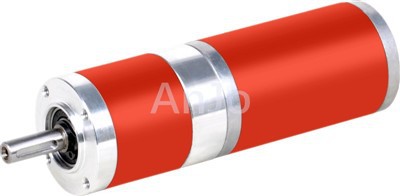
If you’re tired of dealing with hydraulic jacks that leak, come-alongs that slip, or forklifts that can’t fit into your workspace, it’s time to check out screw jacks. Whether you need one for your home workshop, your farm, or your industrial operation, we’ve got a range of sizes to fit any job. Don’t waste another day fighting with a lifting tool that doesn’t work for you. Reach out to us to chat through your needs, get a quote, or ask any questions you have—we’re here to help you find the right solution for your lifting tasks.
Customized Motor References
- Machinery’s Handbook, 31st Edition, Industrial Press, 2020, pp. 1892-1895
- ASME B20.1-2018, Safety Standard for Conveyors and Related Equipment, American Society of Mechanical Engineers, 2018
- Industrial Lifting Equipment Association, “Comparison of Lifting Device Performance”, 2021
- Engineering ToolBox, “Screw Jack Load and Speed Calculations”, 2022
Hangzhou ANG Drive Co., Ltd.
As one of the most professional screw jack manufacturers and suppliers in China, we’re featured by quality products and good service. Please rest assured to wholesale custom made screw jack from our factory. Good service and quality products are available.
Address: No.185, Jincheng Rd., Hangzhou 311202, China
E-mail: export2@angdrive.com
WebSite: https://www.anjodrive.com/
