As a 12V lithium charger supplier, I’ve spent the last eight years working directly with RV mechanics, solar installers, and small business fleet managers—folks who rely on their batteries to power everything from weekend getaways to critical on-site equipment. Early on, I saw too many avoidable headaches: clients coming in with swollen lithium-ion packs, fried wiring, or even near-misses when a charger malfunctioned. What I learned is that not all 12V lithium chargers are created equal. For anyone shopping for these units, it’s not just about price or how fast it charges—it’s about the built-in safety features that turn a handy tool into a reliable workhorse. Let’s break down the non-negotiable features you need to look for. 12v Lithium Charger

First and foremost, lithium batteries are finicky when it comes to overcharging. Unlike lead-acid batteries, which can handle a small amount of extra charge without damage, lithium-ion cells have a narrow voltage window where they operate safely. Overcharging pushes cells beyond their maximum threshold, causing electrolyte breakdown, internal heat buildup, and in worst cases, thermal runaway—a chain reaction that can lead to fires. That’s why a reliable 12V lithium charger must have built-in overcharge protection. For 12V lithium units, that means the charger should automatically cut off power once the battery reaches its fully charged voltage, which is typically 14.2V to 14.6V for standard LiFePO4 cells (the most common type used in recreational and off-grid setups). What I’ve seen on the market lately are budget chargers that skimp here: they just use a timer, not a voltage sensor. That’s a recipe for trouble. Our chargers use a precision multi-point voltage regulator that monitors each cell’s voltage in real time, shutting down smoothly without any sudden power cuts that could damage the battery.
Next up, overcurrent protection. Every time a charger connects to a battery, there’s a small inrush of current as the battery’s internal cells equalize. But if something goes wrong—like a short circuit in the charger’s output cables, or a damaged battery with internal cell failure—the current can spike to dangerous levels. This isn’t just bad for the battery; it can damage your vehicle’s electrical system, cause wiring fires, or even fry the charger itself. A good 12V lithium charger will have an overcurrent protection feature that trips if the current exceeds a safe threshold, usually around 15A to 20A for most 12V units, and it will reset automatically or easily once the issue is fixed. I remember a client last year who was using a generic charger for his RV’s lithium battery; the unit didn’t have overcurrent protection, and a frayed cable caused a short. He came to us with a melted charger and a stressed battery, and he said he never realized how much that small feature mattered. That’s why all our chargers are tested to UL standards for overcurrent tripping, so you never have to worry about that kind of scenario.
Undervoltage protection is another feature that’s easy to overlook, but just as important. Lithium batteries don’t handle deep discharges well. While LiFePO4 cells can handle more cycles than other lithium types, draining them below their minimum voltage (around 9V to 10.5V for a 12V pack) permanently damages the cell structure, reducing capacity and lifespan. A charger with undervoltage protection will only start charging if the battery is above that minimum threshold. If the battery is too low, it will either pause charging until it’s topped up a little, or alert you (via an LED indicator) that the battery needs a separate boost before connecting. I’ve seen clients try to charge a completely dead lithium pack with a regular charger, only to have the charger shut down mid-cycle because the voltage was too low. Our chargers are calibrated to only engage when the battery is at or above 10V, preventing unnecessary stress on both the unit and the battery.
Then there’s reverse polarity protection. This is one of the simplest, most common-sense safety features, and it’s also one of the most frequently skipped in budget chargers. Reverse polarity happens when you hook up the charger’s positive clamp to the battery’s negative terminal, and vice versa. For lead-acid chargers, this often just blows a fuse, but for lithium chargers, the results can be much worse: the charger’s internal circuits can get fried, the battery’s cells can short, and even smoke. A 12V lithium charger with reverse polarity protection will have diodes or a circuit breaker that prevents current from flowing backwards when the clamps are hooked up incorrectly. Every single one of our chargers has this feature built in, and we’ve even tested it intentionally to make sure it works—no more guessing which clamp goes where, especially for users who aren’t familiar with electrical work.
Thermal protection is a must too. Lithium batteries generate heat when charging, and if the environment is already hot (like a closed vehicle in the summer, or a solar setup in direct sunlight), that heat can build up quickly. A charger without thermal protection will keep pumping power even if the unit or the battery gets too hot, raising the risk of damage. A good 12V lithium charger will monitor its own internal temperature and that of the connected battery. If it detects overheating (usually around 140°F to 150°F, depending on the model), it will either reduce the charging rate or shut down until things cool down. Our chargers have both internal and battery temperature sensors, so if you’re charging in a hot garage, it will adjust the current to keep everything safe. Last month, a customer told us he’d been charging his battery in his work truck on a 90°F day, and the charger automatically slowed down instead of overheating—saving him from a potential issue he didn’t even know to look for.
Battery type detection is another key feature, especially if you’re using a charger for multiple setups. 12V lithium batteries come in different chemistries: LiFePO4, lithium-ion (NMC), and even lithium-polymer, each with slightly different charge profiles. Using a charger designed for one chemistry on another can lead to overcharging or undercharging. For example, a charger optimized for NMC cells might charge too fast for LiFePO4, while a lead-acid charger is completely unsuitable for lithium. A reliable charger will have automatic battery type detection, or at least user-selectable presets for different lithium chemistries. This is a big one for campers who might have a LiFePO4 battery for their RV and a different lithium pack for their boat. Our chargers have a simple switch that lets you select between LiFePO4, standard lithium, and even lead-acid if you need it, so you never have to worry about mismatched settings.
Last, but certainly not least, build quality and certification matter. A charger is only as safe as its components. Cheap chargers use thin wiring, low-quality capacitors, and minimal circuit protection to cut costs, and they often lack third-party safety certifications. Look for chargers that are certified by organizations like UL (Underwriters Laboratories) or CE (Conformité Européene), which test units for fire, shock, and electrical hazard standards. At our company, every 12V lithium charger we sell goes through a 24-hour stress test before it leaves our warehouse, and all of them carry UL 62368 certification, the standard for audio/visual, communications, and technology equipment. We’ve seen too many competitors offer uncertified chargers at a lower price, but the risk isn’t worth it. A $50 cheaper charger that could damage your $500 lithium battery is a bad deal.
Now, I know a lot of people see safety features as just extra bells and whistles, but from where I stand as a supplier, these features aren’t optional. They’re the reason our customers come back year after year—because their batteries last longer, their equipment stays safe, and they don’t have to stress about a charger malfunctioning mid-charge. If you’re in the market for a 12V lithium charger, don’t just look for the fastest charging speed or the lowest price. Look for those overcharge, overcurrent, undervoltage, reverse polarity, and thermal protection features, plus third-party certification and compatibility with your battery type.
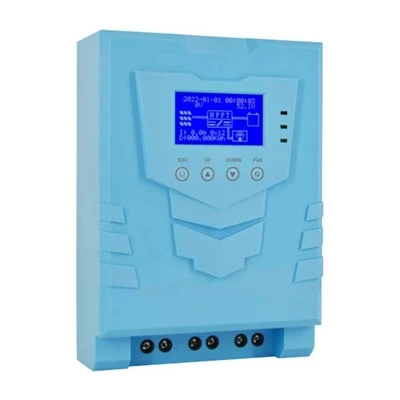
If you’re ready to upgrade your current charger or source units for your business, we’re here to help. Whether you’re a solar installer looking for bulk units, a camper van owner needing a reliable charger for your off-grid setup, or a small fleet manager outfitting work vehicles, we can provide the right 12V lithium charger to meet your needs. Reach out to our team to discuss your requirements and get a customized quote tailored to your application.
12v Lithium Charger References
- “UL 62368-1:2018, Audio/Video, Information and Communication Technology Equipment – Safety Requirements.” Underwriters Laboratories.
- “Lithium-Ion Battery Safety Guidelines.” Occupational Safety and Health Administration (OSHA), U.S. Department of Labor.
- “Charging LiFePO4 Batteries: Best Practices.” Battery University, Cadex Electronics Inc.
- “Overcharge Protection for Lithium-Ion Batteries: Design Considerations.” Texas Instruments Application Report.
- “RV Lithium Battery Maintenance and Charging Standards.” Recreation Vehicle Industry Association (RVIA).
Huizhou Qiangfeng Power Technology Co., Ltd.
Huizhou Qiangfeng Power Technology Co., Ltd. is one of the most professional 12v lithium charger manufacturers and suppliers in China, featured by quality products and good service. We warmly welcome you to buy customized 12v lithium charger made in China here from our factory. If you have any enquiry about quotation and free sample, please feel free to email us.
Address: No. 28, Hu’ao Avenue, Shiwan Town, Boluo County, Huizhou City, Guangdong Province
E-mail: Komco@Jinlidianqi.cn
WebSite: https://www.autobatterychargers.com/
